
Chambéry Elephant Fountain Architecture Details & Guide
Learn about Chambéry Elephant Fountain architecture details in this 2025 guide. Discover history and expert travel tips for your visit to France.
On this page
Chambéry is a beautiful city located in the French Alps region. The city features many landmarks that tell a rich historical story. One of the most famous sites is the Fountain of Elephants. It is a central piece of any Chambéry historical architecture tour. This monument captures the imagination of every traveler who visits Savoie.
The fountain stands as a landmark in the heart of the town. Visitors often marvel at the Chambéry Elephant Fountain architecture details during their walks. It serves as a tribute to a famous military figure from history. You will find it at a busy intersection in the old city.
Historical Context of the Fountain
This monument honors General Benoît de Boigne for his many local contributions. He spent much of his career serving in the military in India. De Boigne donated a large portion of his wealth to the city. The people built this fountain in 1838 to show their gratitude.
Pierre-Victor Sappey designed the structure to be both grand and unique. He wanted to blend European art with exotic themes from the East. The fountain stands as a testament to the General's life and adventures. It remains one of the most iconic Chambéry buildings today.
The project faced several challenges during its initial construction phase. Casting four large elephant heads in iron was a complex technical feat. Workers used local foundries to create these impressive and detailed metal sculptures. The final result surprised the public with its size and beauty.
The fountain reached completion in 1838 and remains a local pride. It survived many changes in the city over the last two centuries. Today it is the primary symbol of the city of Chambéry. History lovers enjoy learning about its origins and the man it honors.
Deep Dive into Architecture Details
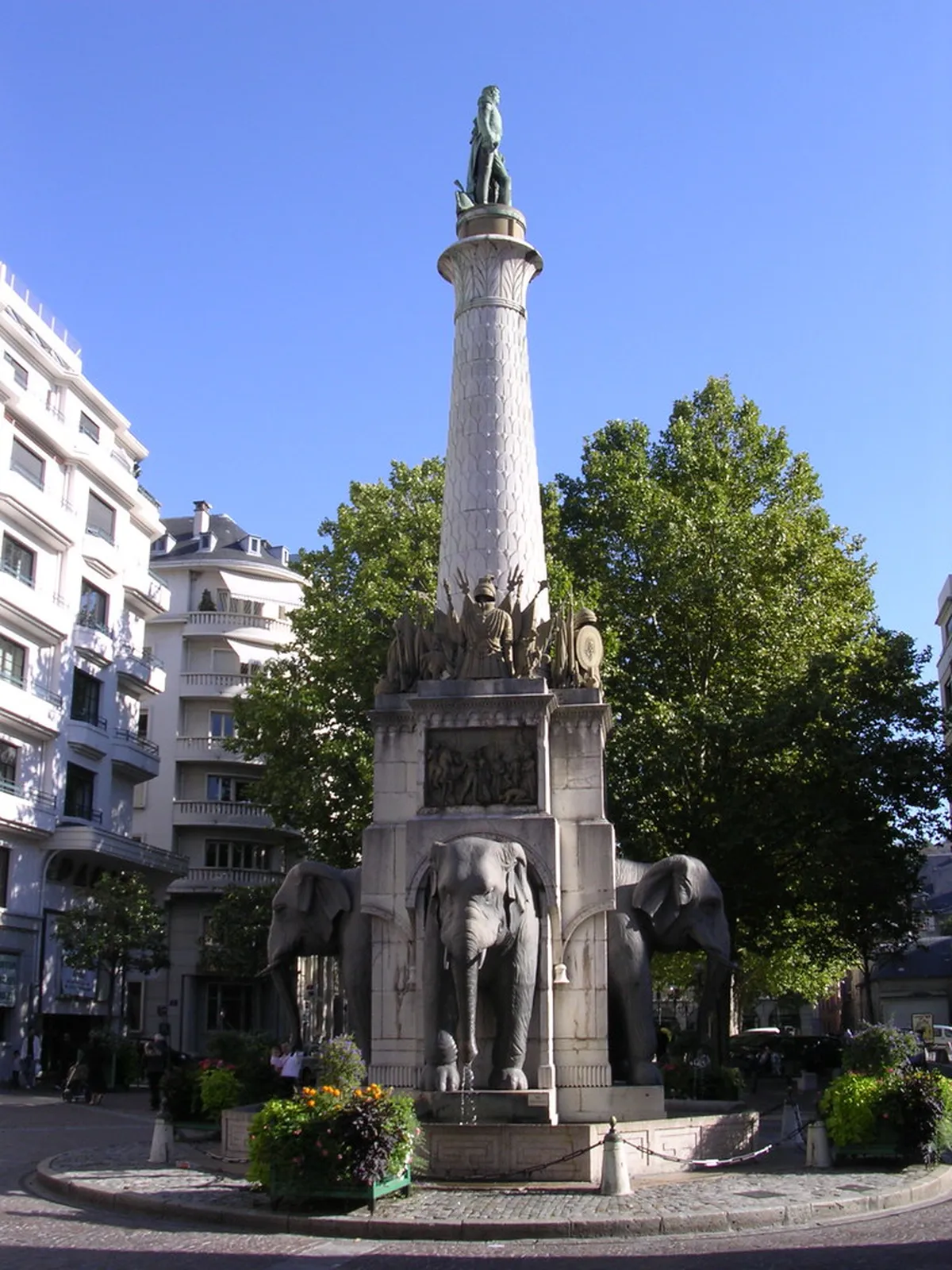
The Chambéry Elephant Fountain architecture details showcase incredible craftsmanship and unique design. Four life-sized elephants emerge from a central stone base in different directions. These statues are made from heavy cast iron and show realistic textures. They appear to support a tall column rising into the sky.
A tall stone pillar sits directly on top of the elephant sculptures. This column looks like the trunk of a giant palm tree. It features intricate leaf patterns carved into the stone near the top. This design reflects the tropical environments where the General once served.
The base of the fountain provides a sturdy foundation for the heavy statues. It is made of local limestone that resists the cold mountain weather. Water flows from the trunks of the elephants into four separate basins. This movement adds life and sound to the busy city intersection.
Sculptures of trophies and weapons also decorate the sides of the column. These elements represent the military victories achieved by General de Boigne. Every small detail on the fountain tells a part of his life. Experts consider it a masterpiece of nineteenth-century urban design.
The Symbolism Behind the Design
The elephants symbolize strength and the General's deep connection to India. They represent the legacy of a man who changed Chambéry forever. Many people call this monument the Four Without Butts in French. This is because only the front parts of the elephants are visible.
The palm tree column adds a touch of exoticism to the French city. It reminds visitors of the vast world beyond the high Alpine peaks. This blend of styles was very popular during the romantic era of art. It creates a striking contrast with the surrounding traditional buildings.
The fountain also serves as a symbol of local community pride. It has stood in the heart of the city for nearly two centuries. Residents gather here for celebrations and many important public events. It is a vital piece of the city's living cultural heritage.
The four directions of the elephants represent the reach of the General. He traveled across continents to serve his country and build his wealth. The fountain brings that global history to the streets of modern France. It is a unique bridge between two very different cultures.
Heritage and Modern Restoration
The city recently completed a major restoration of the entire fountain structure. Experts cleaned the iron statues to prevent rust and environmental damage. They also repaired the internal plumbing to ensure the water flows correctly. These efforts preserve the site for many future generations of travelers.
Modern visitors can still appreciate the original vision of the architect. The fountain remains a focal point for tourism in the Savoie region. It acts as a bridge between the city's past and its future. You will find it listed in every major travel guide for France.
The area around the fountain is now mostly a pedestrian zone. This makes it safer and more pleasant for tourists to explore. You can sit on a nearby bench and watch the world go by. It is the perfect place to start your Chambéry adventure.
The fountain is now a protected historical monument under French law. This status ensures that it will be maintained with the highest care. Local schools often bring children here to learn about their local history. It remains a teaching tool for art and architecture students alike.
Photography and Visiting Tips for 2025
Planning a trip to see this monument in 2025 is very easy. The fountain is located at the intersection of several main city streets. You can find many great Chambéry photography spots nearby for the perfect shot. Morning light offers the best conditions for capturing the metal textures.
Take time to walk around the entire base of the structure. Look closely at the elephant faces to see the fine artistic details. You will notice the small tusks and the folds in their iron skin. These details are best viewed from a very close distance.
The fountain is especially beautiful when it is illuminated at night. Bright lights highlight the column and the water flowing from the trunks. It creates a romantic atmosphere that is perfect for a late walk. Visit during the week to avoid the largest tourist crowds.
You should also explore the narrow streets that lead away from the square. Many small shops and cafes surround this central landmark for your enjoyment. You can find a Chambéry art architecture map to guide your walking tour. This will help you discover other hidden gems in the old town.
Frequently Asked Questions
What is the best time of day to see the Elephant Fountain?
Early morning is the best time for a visit. The light hits the sculptures perfectly for photos. You will also find fewer crowds during these hours. The evening is also beautiful when the lights turn on.
How much does it cost to visit the fountain in Chambéry?
Viewing the fountain is completely free for everyone. It is a public monument located in an open city square. You can spend as much time as you like there. There are no tickets or entry fees required.
Why are there elephants on a fountain in France?
The elephants represent the military service of General de Boigne in India. He wanted to bring a piece of his history to his home. The design reflects his exotic travels and professional success. It is a unique monument in the French Alps.
Is the Elephant Fountain easy to find in the city?
Yes, it is located at the center of the old town. Most city maps highlight this landmark as a primary meeting point. It is situated where the Rue de Boigne meets other streets. You can reach it easily by foot from the station.
The Elephant Fountain is a must-see landmark for anyone visiting Chambéry in 2025. It offers a unique look at the history and art of the region. Make sure to include this site in your next travel itinerary. You will not regret seeing this architectural wonder in person.
Key Takeaways
- The fountain was built in 1838 to honor General de Boigne.
- The architecture blends European stone with cast iron elephant sculptures.
- It is free to visit and located in the city center.
- Best viewing times are early morning or late evening.
Related reads: streetartly.com.