
Reims Cathedral Stained Glass Meaning: A Complete 2025 Guide
Explore the deep Reims Cathedral stained glass meaning in our 2025 guide. Learn about the Marc Chagall windows and Gothic history. Plan your visit today!
On this page
Reims Cathedral stands as a masterpiece of High Gothic art in northern France. It is famous for its intricate design and historical significance. Understanding the Reims Cathedral stained glass meaning reveals centuries of deep religious stories. These vibrant windows tell tales of kings, saints, and modern resilience. This 2025 guide explores the symbolism hidden within these glass walls.
The Evolution of Stained Glass Art in Reims
The glass at Reims spans over eight centuries of artistic development. Original 13th-century panels sit beside contemporary 21st-century works. This mix creates a unique visual timeline for every visitor. Each window serves a specific spiritual and educational purpose. Artists have used light to bridge the gap between heaven and earth.
Early medieval windows focused on biblical narratives for the illiterate public. They used deep blues and vibrant reds to capture the natural light. The Reims Cathedral gothic architecture history influenced how these windows were framed. Builders created larger openings to allow more light into the wide nave. This innovation changed how worshippers experienced the sacred space.
During the First World War, the cathedral suffered heavy damage from shelling. Many original medieval windows were lost to fire and explosions. The subsequent restoration efforts brought new artists to the site. These craftsmen sought to honor the past while looking toward the future. They used ancient techniques to create modern symbols of hope.
Today, the cathedral displays a mix of styles that harmonize beautifully. You can see the shift from figurative art to abstract expressionism. Each century added its own voice to the choir of glass. Visitors can spend hours tracking these changes across the different chapels. It is a living museum of light and color.
Entry to the cathedral is free for all visitors in 2025. It is open daily from 7:30 to 19:30 for public viewing. Plan your visit during the morning for the best light effects. This allows the sun to illuminate the oldest panels on the north side. The experience is both spiritual and historically enlightening.
The Meaning of the Great Rose Windows
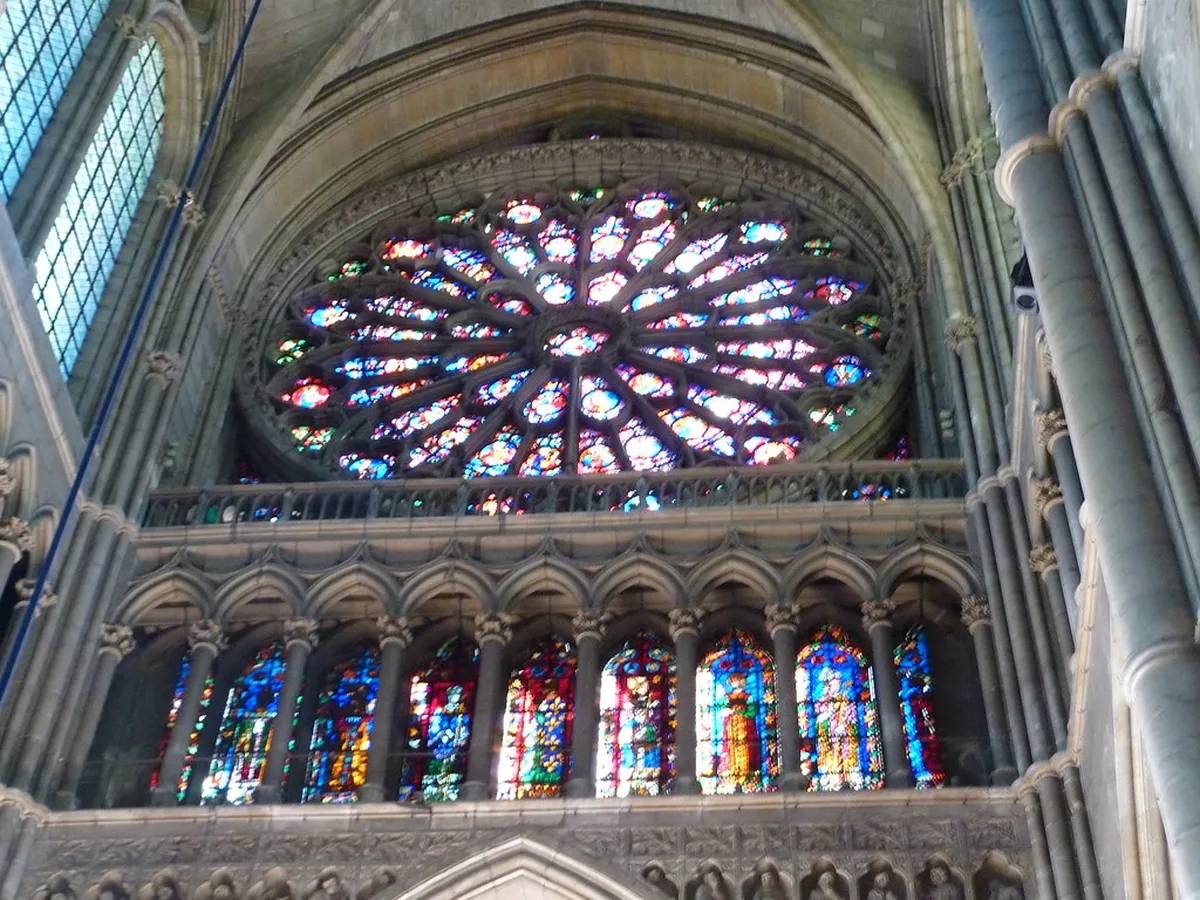
The west facade features a stunning rose window dedicated to the Virgin Mary. It represents the Litany of the Virgin through complex geometric patterns. Central figures depict Mary surrounded by twelve apostles and musical angels. This window symbolizes divine perfection and the eternal heavenly kingdom. It remains a focal point for all who enter the main portal.
The north transept rose window focuses on the complex Creation story. It displays scenes from the Book of Genesis in circular medallions. Light passing through these panels reminds worshippers of God's creative power. The intricate stone tracery shows the peak of Reims Cathedral architecture mastery. Every petal of the rose contains a different part of the universe.
Each color used in these windows carries its own specific symbolism. Blue often represents the heavens and the purity of the Virgin. Red symbolizes the blood of Christ and the fire of the spirit. Gold and yellow tones reflect divine light and kingly power. These colors work together to create a heavenly atmosphere inside.
The geometry of the rose window is also highly symbolic. The circle represents eternity and the perfection of the divine soul. Many petals represent the months of the year or the zodiac signs. This connects the spiritual world to the physical passage of time. It reminds visitors that the divine exists within their daily lives.
Viewing the rose windows during sunset is a magical experience. The low sun sets the colors ablaze against the dark stone. This effect was intentional by the original Gothic master builders. It creates a sense of awe that words cannot easily describe. Photography is allowed but avoid using a flash to protect the glass.
Marc Chagall and the Blue Windows of Reims
In 1974, Marc Chagall contributed modern windows to the cathedral's eastern end. These three windows replaced glass destroyed during the many world wars. They blend modern art with traditional religious themes in a deep blue. The central window illustrates the Tree of Jesse and Christ’s genealogy. This work brought a renewed global interest to the ancient cathedral.
Chagall’s work adds a new layer to the Reims Cathedral stained glass meaning. His expressive style captures the emotional weight of biblical history and suffering. The windows honor the city’s recovery from past wartime devastation. Many visitors find these modern additions to be deeply moving and personal. They represent the resilience of the human spirit through art.
The windows also depict the history of the French monarchy in Reims. You can see scenes of kings being anointed by the holy oil. This connects the spiritual site to the political history of France. Chagall used his signature dreamlike figures to tell these old stories. The result is a vibrant tapestry made entirely of light.
The depth of the blue color is a technical marvel of glass. Chagall worked closely with the Jacques Simon workshop in Reims. They used layers of pigment to achieve the specific sapphire tone. This color creates a calm and meditative mood in the axial chapel. It encourages quiet reflection and prayer for all visitors.
Walking through these chapels is a highlight of Reims walking tours architecture fans recommend. Guides often explain the specific Jewish and Christian symbols in Chagall’s work. This interfaith approach makes the windows relevant to a broad audience. It highlights the cathedral's role as a symbol of peace. The windows are a must-see for any art lover.
Imi Knoebel and Contemporary Symbolic Light
German artist Imi Knoebel designed six windows for the cathedral recently. These abstract works use primary colors to symbolize peace and reconciliation. They stand near the Chagall windows in the Jeanne d’Arc chapel. Knoebel’s designs lack traditional figures but convey immense spiritual energy. The bold colors contrast sharply with the ancient grey stone.
The addition of Knoebel’s glass reflects the ongoing life of the monument. These windows commemorate the 800th anniversary of the cathedral's initial construction. They bridge the gap between ancient stone and modern artistic expression. Knoebel donated some of these works as a gesture of friendship. This act symbolizes the healing of Franco-German relations after the wars.
The windows consist of hundreds of small pieces of colored glass. Knoebel used a collage technique to create a sense of movement. The red, yellow, and blue panels seem to dance in the light. This abstraction allows every visitor to find their own personal meaning. It invites a subjective experience within a highly structured religious space.
Light from these windows changes the atmosphere of the entire choir. On sunny days, the floor is covered in colorful abstract patterns. This dynamic display shows that the cathedral is not a static museum. It continues to evolve with the artistic vision of new generations. The glass acts as a living bridge between different eras.
The Jeanne d’Arc chapel is a place of significant historical weight. It honors the patron saint of France who helped crown the king here. Placing modern abstract art in this space was a bold choice. It shows that the church values contemporary ways of expressing faith. Most tourists find the contrast between old and new quite striking.
The Champagne Window and Local Heritage
The Champagne Window pays tribute to the region's famous sparkling wine industry. It was donated by local wine corporations in 1954 to replace glass. The panels depict the process of grape growing and wine production. St. Vincent, the patron saint of winemakers, features prominently in the design. This window connects the cathedral to the local community's daily work.
This window shows that sacred spaces also celebrate the lives of people. You can see detailed tools and vines used in traditional viticulture. This unique blend of secular and holy themes is rare in cathedrals. It emphasizes the importance of the land to the identity of Reims. The workers are shown with dignity and spiritual purpose.
The colors in this window are warmer than the medieval blue glass. Earthy greens and golden yellows reflect the fields and the wine. It creates a warm glow in the southern part of the building. Visitors often smile when they recognize the familiar scenes of harvest. It makes the grand architecture feel more accessible and local.
The Champagne Window is located near the southern transept of the cathedral. It serves as a reminder of the city's economic and cultural heart. Many local families have worked in these vineyards for several centuries. Seeing their trade immortalized in glass is a source of great pride. It is a beautiful example of mid-century narrative art.
Exploring these features is a part of famous Reims landmarks tours in the city. Guides will point out the specific champagne houses that funded the glass. You can see the crests of famous brands near the bottom panels. It is a fascinating look at the intersection of industry and faith. Don't miss this unique detail during your visit.
Frequently Asked Questions
What is the primary meaning of the Reims Cathedral stained glass?
The windows primarily illustrate biblical stories and the history of French kings. They served as visual bibles for the public during the Middle Ages. Modern windows symbolize peace and the city's recovery from world wars. Each panel uses light to convey spiritual truths and local heritage.
Who designed the modern windows in Reims Cathedral?
Marc Chagall designed three famous blue windows in the axial chapel in 1974. German artist Imi Knoebel created abstract windows for the cathedral in 2011 and 2015. These artists added contemporary perspectives to the historic Gothic structure. Their work emphasizes reconciliation and the endurance of art through conflict.
Are the windows at Reims Cathedral original from the 13th century?
Only about one-third of the original medieval glass remains in the cathedral today. Significant portions were destroyed during World War I and the French Revolution. The current display is a mix of medieval, 20th-century, and 21st-century glass. This variety makes the cathedral a unique record of European glass art.
Reims Cathedral stained glass meaning is a rich tapestry of faith and history. From medieval roses to Chagall’s blues, the glass tells a story of survival. Visit Reims in 2025 to experience this breathtaking display of light for yourself. It is an unforgettable journey through art and time in the heart of France.
Key Takeaways
- The glass spans 800 years of history from medieval to modern styles.
- Marc Chagall’s blue windows are a highlight of 20th-century religious art.
- The Champagne Window celebrates the local region’s wine-making heritage and culture.
- Abstract windows by Imi Knoebel symbolize peace between France and Germany.
Related reads: streetartly.com, street art and architecture in reims.