
Château Angers Architecture: 2025 Visitor Guide
Discover the stunning Château Angers Architecture in this 2025 guide. Learn about medieval walls and the Apocalypse Tapestry. Plan your visit to this French fortress today!
On this page
The Château Angers Architecture represents one of the most imposing examples of medieval military construction in France today. This massive fortress overlooks the Maine River and defines the skyline of the historic city of Angers. Visitors in 2025 will encounter seventeen huge towers that showcase the power of the former Dukes of Anjou. The castle serves as a perfect destination for those interested in European history and ancient defensive designs.
This site successfully blends functional military fortifications with the elegant living spaces required by royalty. You can explore the vast grounds and discover how the structure evolved over several centuries of French history. The walls hold stories of war, peace, and artistic achievement that continue to fascinate modern travelers and scholars. Experience the grandeur of this architectural masterpiece while exploring the charming streets of the Maine-et-Loire region.
The Striking Defensive Walls and Towers
The exterior walls are the primary feature of the Château d'Angers architectural details visible today. These walls stretch for nearly five hundred meters around the entire perimeter of the hilltop site. You will notice the unique alternating layers of dark slate and white limestone on every single tower. This bicolor design served as a structural choice and a bold display of immense regional wealth.
Each of the seventeen towers originally stood much higher than they appear to modern visitors today. King Henry III of France ordered their heights reduced during the sixteenth-century wars of religious conflict. This modification allowed for better cannon placement and improved defensive capabilities against contemporary siege gunpowder weapons. Today, these towers remain nearly thirty meters high and provide a formidable silhouette against the French sky.
The defensive walls measure three meters thick in most places to withstand heavy bombardment from invading forces. Architects used local schist rock to ensure the foundation remained solid and impenetrable for many hundreds of years. You can walk along the high ramparts to see exactly how these ancient defense systems once worked. The view from these walls offers a perfect perspective of the surrounding city and the river.
Small slit windows known as arrow loops are visible at various levels throughout the massive stone towers. These openings allowed defenders to fire upon attackers while remaining safely protected behind the thick stone masonry. The engineering required to build such a massive structure in the thirteenth century is truly remarkable to behold. Every stone was carefully placed to ensure the castle could survive even the longest and most difficult sieges.
Modern restoration efforts have preserved the integrity of these walls for generations of future travelers to enjoy. The contrast between the dark stone and the surrounding greenery makes for incredible photography opportunities during your visit. Walking the full circuit of the walls takes about forty-five minutes and provides a deep historical immersion. This defensive circuit remains the most iconic part of the entire fortress complex for all visiting tourists.
The Gothic Chapel and Royal Residences
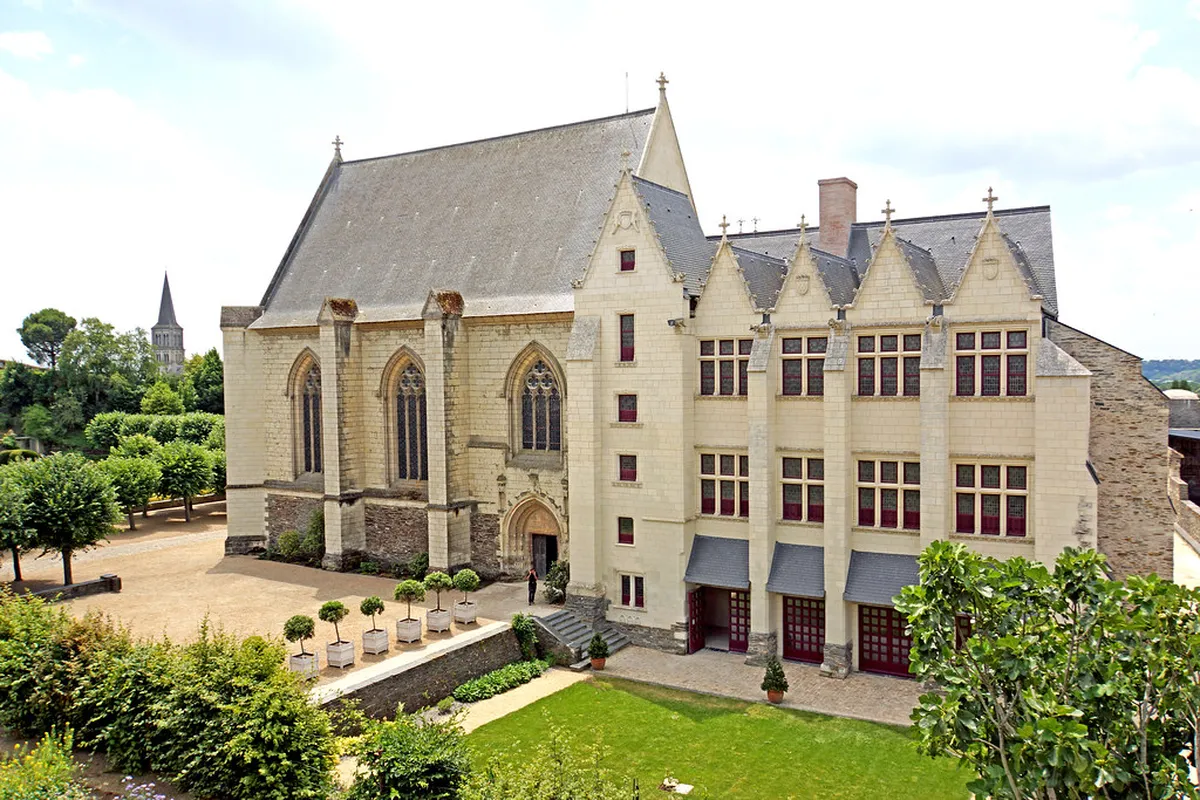
Inside the fortress walls, the architectural style shifts from military power to delicate and refined royal comfort. The Saint-Laud Chapel is a fine example of the Angevine Gothic style from the early fifteenth century. It features a single nave and elegant ribbed vaulting that highlights the impressive height of the interior ceiling. This chapel served the private spiritual needs of the Dukes of Anjou for many prosperous generations.
The royal residences showcase the lifestyle of the medieval French elite during the middle of the fifteenth century. Large windows were added to these buildings during peaceful times to allow more natural light into the rooms. These structures contrast sharply with the dark and heavy stone of the exterior defensive towers and walls. You will see intricate stonework and large fireplaces that reflect the high status of the ruling dukes.
Many of these buildings underwent careful restoration to maintain their historical integrity for all visitors in 2025. The transition from a fortress to a home is visible in the layout of the inner courtyard. It is often helpful to take architectural tours to understand these subtle and interesting design changes. The interior spaces reveal a much softer side of the otherwise imposing and heavy stone castle.
Architects designed the residential wings to provide both security and the luxury expected by the French royal family. Elaborate wooden ceilings and stone carvings decorate the rooms where the dukes once held their important meetings. You can almost feel the history of the Anjou dynasty as you walk through these quiet halls today. These buildings represent the peak of residential design before the Renaissance style changed French architecture forever.
The courtyard surrounding these residences is filled with well-manicured lawns and historical paths for visitors to follow. Benches are available for those who want to sit and admire the detail of the Gothic windows. Each building tells a different story about the daily lives of the people who lived inside the castle. This area of the fortress provides a peaceful escape from the busy city streets just outside.
Apocalypse Tapestry Gallery and Design
A modern architectural addition now houses the world-famous Apocalypse Tapestry within the historic castle grounds. This gallery was specifically built in 1954 to protect the fragile medieval textile from dangerous light damage. The building uses sophisticated temperature control and dim lighting to ensure the artwork lasts for many future generations. Its minimalist design does not distract from the vibrant colors and incredible details of the ancient tapestry.
The tapestry itself is over one hundred meters long and dates back to the late fourteenth century. It represents one of the greatest artistic achievements of the Middle Ages in all of Western Europe. Architects had to design a space that could accommodate such a massive and delicate work of historical art. The gallery follows the natural curve of the castle walls to maximize the available interior exhibition space.
Visiting this gallery is a major highlight for anyone interested in medieval history and textile art forms. The dark interior creates a focused environment where the gold and red threads of the tapestry truly shine. You can learn more about this by exploring medieval architecture in the local region. This modern addition successfully blends the old fortress with contemporary museum and preservation standards.
The layout of the gallery allows you to walk the entire length of the tapestry in a loop. Information panels provide context for each of the scenes depicted in the woven wool and silk threads. Seeing such a large-scale work of art in person is a humbling and memorable experience for travelers. The building remains a vital part of the castle's mission to preserve French cultural heritage today.
Security measures within the gallery are state of the art to protect this priceless piece of French history. The air is filtered to remove dust and pollutants that could harm the ancient fibers over time. Visitors are asked to maintain a respectful silence while moving through the long and darkened exhibition hall. This section of the castle visit offers a deep dive into the religious and political medieval mind.
The Moat and Garden Landscaping
The moat of the castle was never actually filled with water during its long and complex history. Instead, the deep trenches were designed to prevent enemies from using heavy siege towers against the high walls. In the nineteenth century, these massive spaces were converted into beautiful ornamental gardens and lush green lawns. Today, they feature precise geometric patterns that follow the classic and elegant French formal garden style.
Visitors can stroll through these gardens to admire the massive scale of the towers from the ground. The greenery provides a soft contrast to the dark slate and white limestone of the castle walls. These gardens are carefully maintained to reflect the aesthetic preferences of many different historical French eras. In 2025, you can find a wide variety of local plants and flowers blooming there.
The gardens also host various cultural events and temporary art exhibitions throughout the busy summer months. Walking through the dry moat allows you to appreciate the sheer height of the impressive defensive works. This area is perfect for professional photography and offers unique angles of the castle construction. The blend of nature and stone creates a peaceful and quiet atmosphere for all visitors.
Large trees provide shade for those who want to enjoy a picnic near the ancient fortress walls. The garden paths are well-marked and easy to navigate for families traveling with small children. You can see how the landscape has changed from a place of war to a place of beauty. This transformation is a common theme found throughout many historic sites in the Loire Valley region.
Local gardeners work year-round to ensure the plants remain healthy and the designs stay sharp and clean. During the spring, the flowers create a colorful border around the base of the massive gray towers. This garden space is free to enter for those who have purchased a general admission castle ticket. It remains one of the most relaxing places to spend an afternoon in the city.
Evolution of the Main Entrance and Drawbridge
The main entrance of the castle is a masterpiece of both defensive and symbolic medieval architecture. It features a massive gatehouse designed to trap and defeat any intruders who broke through the perimeter. You will see the narrow slots where the heavy portcullis would drop to seal the entire fortress. The drawbridge design was a critical component of this very sophisticated security system.
Originally, the bridge could be raised quickly to prevent all access across the deep defensive moat system. Modern visitors now enter through a permanent stone bridge that replaced the old wooden and metal structure. Above the gateway, you can still see the carvings and symbols of the powerful French monarchy. These details served to remind all visitors of the immense power of the ruling Anjou family.
The gateway leads directly into the heart of the castle's administrative and residential center and courtyards. Its narrow passage was designed to limit the number of people entering the fortress at one time. This architectural choice ensured that even a small guard could defend the main entrance very effectively. Studying this entrance provides a deep look into the military mindset of the European Middle Ages.
You can still see the heavy iron hinges where the original wooden doors were once securely attached. The masonry around the entrance is reinforced with extra stone to prevent damage from battering ram attacks. Defenders could also drop stones or boiling liquids through holes in the ceiling called murder holes. This entrance was the first and last line of defense for the people living inside.
Today, the entrance is where you will find the ticket office and the visitor welcome center. It remains the only way into the castle for the thousands of tourists who visit every year. The transition from a military checkpoint to a tourist entrance is a fascinating part of history. Be sure to look up and admire the stonework as you walk through the gate.
Architectural Preservation and 2025 Tourism
Preserving the Château Angers Architecture requires constant effort from the French national heritage organizations and local workers. Regular maintenance ensures that the slate and limestone layers do not crumble over time due to weather. In 2025, new lighting systems were installed to highlight the castle's features during the dark night. These updates make the fortress a stunning sight for evening walks through the city of Angers.
Travelers should plan for at least three hours to explore the entire site and its museums thoroughly. Tickets cost approximately eleven euros for adults, though prices may vary during special seasonal exhibitions. The site is accessible for most visitors, with paved paths leading through many of the garden areas. You can find more information about visiting the castle online before you start your trip.
The castle is located in the heart of Angers, making it very easy to reach by foot. Wear comfortable shoes because the historic rampart walks often involve some uneven and steep stone surfaces. Early morning visits are usually best to avoid the largest tour groups and enjoy the natural silence. This site remains one of the most important architectural landmarks in western France for 2025.
Educational programs for students are offered throughout the year to teach the next generation about medieval history. The castle shop offers books and souvenirs that focus on the architecture and the Apocalypse Tapestry. Buying these items helps support the ongoing costs of maintaining such a massive and old structure. Every visitor contributes to the survival of this important piece of French and European history.
The city of Angers itself offers many other architectural wonders within walking distance of the fortress gates. You can easily combine a visit to the castle with a tour of the nearby cathedral. The local restaurants serve traditional food that has been enjoyed in this region for several hundred years. Make the most of your trip by exploring everything this historic French city has to offer.
Frequently Asked Questions
What materials were used to build the Château d'Angers?
The castle was primarily built using local dark schist slate and white limestone layers. These materials provided incredible strength and created the famous striped appearance of the seventeen towers. Builders sourced the stone from nearby quarries to reduce the high cost of transportation during the thirteenth century.
Can visitors walk on the castle ramparts today?
Yes, visitors can walk along the top of the defensive walls for almost the entire perimeter. The walk offers spectacular views of the Maine River and the city of Angers below. You should wear sturdy shoes as the stone paths can be uneven in certain historical areas.
Is the Apocalypse Tapestry always available for public viewing?
The tapestry is housed in a permanent, climate-controlled gallery within the castle grounds and is open daily. It is one of the world's most significant medieval textiles and is a major highlight of the visit. The gallery uses low lighting to prevent any fading of the ancient and delicate threads.
How long does a typical visit to the castle take?
Most visitors spend between two and three hours exploring the walls, gardens, and the tapestry gallery. If you enjoy reading every information panel, you might want to allow for a half-day visit. The site is large, so taking your time allows for a much better overall experience.
The Château Angers Architecture is a remarkable example of medieval strength and royal elegance in France. From the striped towers to the delicate chapel, every detail tells a unique story of French history. Plan your 2025 visit to experience this massive fortress and its artistic treasures in person today. You will leave with a deep appreciation for the architectural skill of the European Middle Ages.
Key Takeaways
- Marvel at the seventeen massive towers built with iconic striped slate and limestone.
- See the world-famous Apocalypse Tapestry in its specialized protective gallery building.
- Walk the high ramparts for the best panoramic views of the city of Angers.
- Explore the beautiful formal gardens located within the deep, dry defensive moats.
Related reads: streetartly.com, street art and architecture in angers, angers street art guide.