
Unveiling Saint-Maurice Cathedral Angers Architectural Style
Discover the remarkable Saint-Maurice Cathedral Angers architectural style. Learn about its Romanesque and Gothic blend. Plan your visit to this historic French gem now!
On this page
Angers, France, holds a true architectural marvel: Saint-Maurice Cathedral. This stunning edifice showcases a unique blend of styles. Its rich history spans centuries of construction. Understanding the Saint-Maurice Cathedral Angers architectural style reveals its fascinating story. It is a must-see for any visitor in 2025. Discover the layers of history within its ancient walls. Angers Cathedral's design history is truly captivating.
Romanesque Roots: The Early Foundations
The cathedral's earliest parts date back to the 11th and 12th centuries. This initial phase established its Romanesque foundations. Visitors can observe thick walls and rounded arches. These features characterize the sturdy Romanesque architectural style.
Construction began after a fire in 1032. The single nave was initially covered with a wooden roof. This early structure reflected typical Romanesque solidity. It was built for resilience and grandeur.
Key elements like the west facade retain Romanesque influences. The lower sections show this older, robust style. Observe the strong stone masonry carefully. These foundational layers tell of the cathedral’s long past.
You can clearly see how the building evolved over time. These Romanesque elements are crucial for understanding the cathedral's development. They provide a strong base for later additions. The Cathedral's Romanesque and Gothic influences are truly distinct.
Gothic Grandeur: Evolving Angevin Style
The 13th century brought significant Gothic transformations. Bishop Guillaume de Beaumont oversaw major rebuilding efforts. These changes adopted the innovative Angevin Gothic style. This regional variant offers unique characteristics.
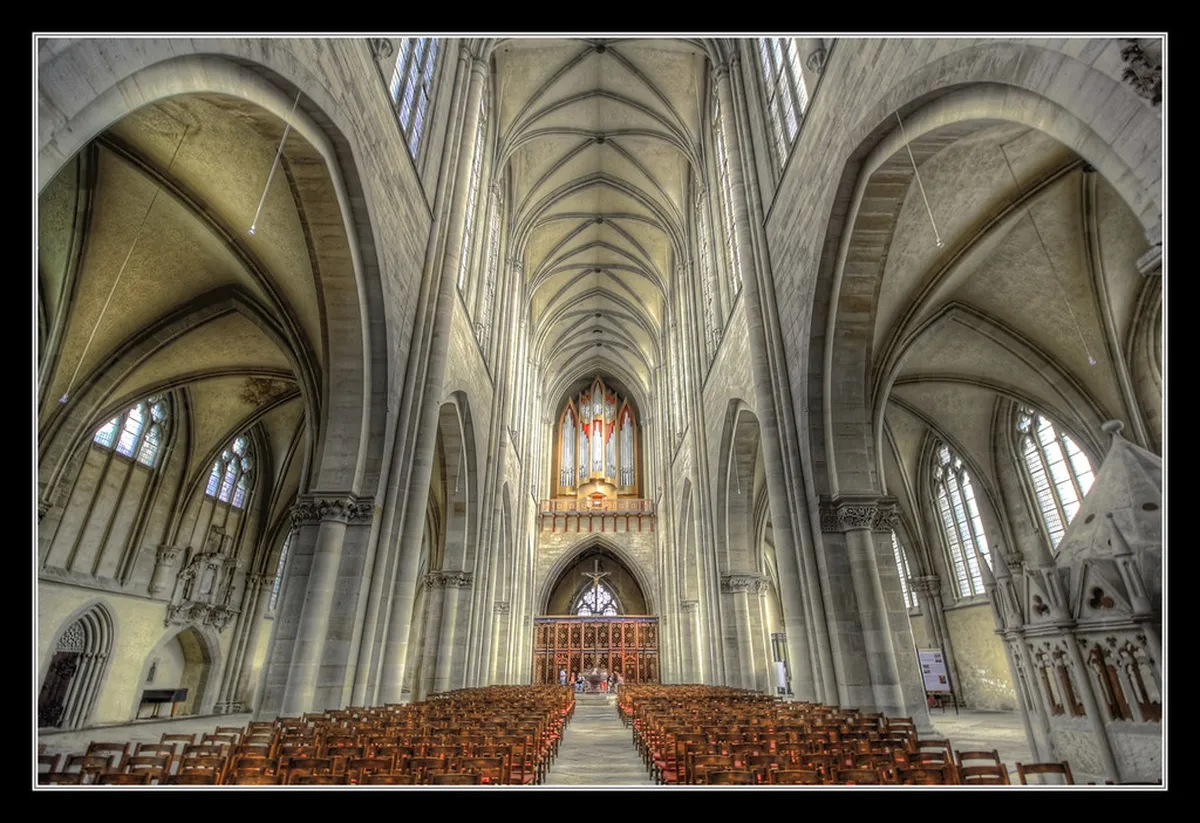
The nave received its famous Angevin vaults. These impressive structures resemble domed umbrellas. They allowed for larger windows and more light. This marked a shift from the heavier Romanesque design.
The choir and transepts also showcase Gothic additions. Soaring heights and delicate rib vaulting define these areas. The pursuit of verticality became paramount. This created a sense of awe and spiritual elevation.
Flying buttresses were added to support the new vaults. These external supports enabled thinner walls. They allowed for vast stained-glass windows. These windows flood the interior with vibrant light and color.
Distinguishing Angevin Gothic Features
The Angevin Gothic style is a regional marvel. It is sometimes called 'Plantagenet Gothic'. Its unique vaults distinguish it clearly. These vaults rise sharply to a central point, creating a distinctive profile.
Unlike Parisian Gothic, Angevin vaults are not overly high. They create a sense of vastness rather than extreme verticality. The ribs fan out like spokes from a wheel. This intricate pattern is visually stunning.
The central point of each vault often features an elaborate boss. These carved stones add decorative flair. They showcase medieval craftsmanship and artistry. Take time to look up and admire these details.
This style's innovation allowed for expansive interiors. It minimized the need for numerous pillars. This creates an open, flowing space. Visitors appreciate the spacious feel of Angers Cathedral's interior architecture.
Later Additions and Renovations
Saint-Maurice Cathedral continued to evolve through the centuries. Renaissance and Baroque elements were incorporated. These later additions added new layers to its architectural story.
The striking western towers were completed much later. The south tower dates to the 16th century. The north tower was finished in the 17th century. They feature ornate details that differ from earlier styles.
The west facade itself underwent significant changes. Its current appearance blends various eras. You can see sculpted figures from different periods. These additions reflect changing artistic tastes over time.
Inside, elements like altars and chapels show various periods. They include Baroque ornamentation and classical influences. These layers demonstrate the cathedral's enduring importance. It has been a continuous site of worship and renewal.
Appreciating the Cathedral's Architecture
To fully appreciate the Saint-Maurice Cathedral Angers architectural style, take your time. Start by observing the exterior facade. Notice the blend of Romanesque solidity and Gothic aspiration. Look for the distinct tower designs.
Next, step inside and look up. The Angevin vaults are truly magnificent. Trace the lines of the ribs fanning out. Pay attention to the intricate bosses at the vault's apex. The light filtering through ancient stained glass is captivating.
Walk through the nave, transepts, and choir. Compare the different construction phases. Imagine the centuries of work involved. Consider how various builders contributed their vision. This historical journey enhances your visit.
Consider joining a guided tour for deeper insights. Experts can point out subtle details. They can share stories behind the various architectural changes. This enriches your understanding of this historic monument.
Frequently Asked Questions
What is the primary architectural style of Saint-Maurice Cathedral Angers?
The Saint-Maurice Cathedral Angers architectural style is primarily Angevin Gothic. However, it also incorporates significant Romanesque elements. This creates a fascinating and unique blend. The cathedral shows centuries of evolution.
How does Angevin Gothic differ from other Gothic styles?
Angevin Gothic is distinct for its domed, high-springing vaults. These vaults create a broad, unified interior space. This differs from the extreme verticality of Parisian or Northern French Gothic. Its umbrella-like vaults are a signature feature.
Are there still Romanesque elements visible in Angers Cathedral?
Yes, significant Romanesque elements are visible. The lower parts of the west facade are Romanesque. You can see robust masonry and rounded arches. These foundations demonstrate historic Angers building styles and earlier construction.
Saint-Maurice Cathedral in Angers stands as a testament to architectural evolution. Its unique blend of Romanesque and Angevin Gothic styles is remarkable. Exploring its design offers a journey through history. We encourage you to experience this magnificent structure firsthand. Plan your visit to Angers in 2025 and witness its beauty. Appreciate the intricate details that make it so special.
Key Takeaways
- Saint-Maurice Cathedral boasts a rare blend of Romanesque and Angevin Gothic styles.
- The 'umbrella vaults' are a defining and unique feature of its Angevin Gothic design.
- Look for both the robust early Romanesque foundations and the soaring Gothic additions.
- Allow ample time to explore both exterior details and the grand interior spaces.