
Hospices de Beaune Architecture Guide: 2025 Visit Tips
Explore the iconic Hospices de Beaune architecture in 2025. Learn about the glazed tile roofs and Flamboyant Gothic style. Book your tour of this French gem today!
On this page
The Hospices de Beaune architecture represents a stunning masterpiece of 15th-century design located in the heart of Burgundy. This building is a remarkable example of Flamboyant Gothic style that attracts thousands of visitors every single year. You will find that the structure remains one of the best-preserved medieval hospitals in the entire world today. Planning your 2025 journey to this site provides a deep look into French history and local art.
Nicolas Rolin and his wife founded the Hotel-Dieu in 1443 to serve the poor and the sick inhabitants. The hospital was created after the Hundred Years' War left many local citizens in a state of poverty. This noble project showcased the charity and the incredible wealth of the Burgundy dukes during that historic era. It stands as a symbol of hope and architectural beauty that has lasted for over five centuries.
Visitors in 2025 can admire the striking contrast between the plain exterior and the vibrant interior design details. The building uses local limestone which gives the facade a warm and very welcoming appearance to all guests. Every corner of the site reveals unique artistic touches that highlight the craftsmanship of the late Middle Ages. This guide will help you explore every important detail of the famous building and its rich cultural history.
The Origins of Hospices de Beaune Architecture
The initial design of the hospital focused on providing a clean and spiritual environment for the local sick. Architect Jehan Wiscrere combined traditional French elements with unique Flemish influences to create this grand medical facility. You will notice the steep roofs and the delicate stone carvings that define the late Gothic period here. Many Beaune historical buildings utilize similar materials but none reach this level of artistic grandeur.
The construction was completed in 1452 and the hospital began accepting patients shortly after the official opening ceremony. Thick stone walls were built to keep the interior cool during the hot summer months in the region. The layout features a large central courtyard that connects all the different wards and the private living quarters. This functional design allowed the staff to move quickly between the patients and the main kitchen area.
Nicolas Rolin wanted the building to look like a palace to honor the dignity of the poor people. He spared no expense on the materials or the skilled labor required to build such a massive complex. The architecture served as a testament to his faith and his high social standing within the French court. Today, the site remains a source of pride for the local community and the entire Burgundy wine region.
The hospital functioned as a medical center until the late 1970s when a new modern facility was built. It now serves as a museum where you can explore the evolution of medicine and medieval social care. Walking through the halls allows you to step back in time and imagine life in the 15th century. It is a vital stop for anyone interested in the history of European healthcare and structural design.
The Iconic Glazed Roof Tiles of Burgundy
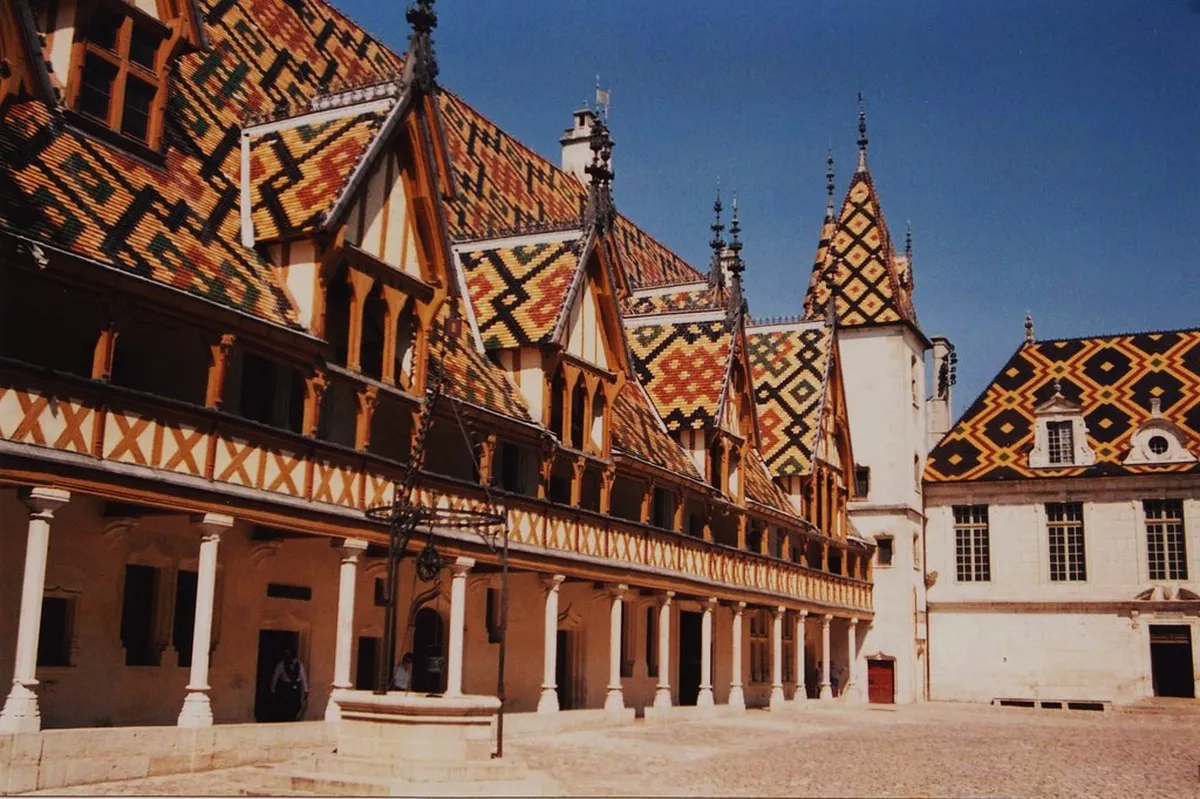
The most recognizable feature of the building is the colorful and geometric pattern of the glazed roof tiles. These tiles are made of terracotta and are coated with a bright lead-based glaze for a glossy finish. You can see vibrant shades of red, brown, yellow, and green that create a beautiful tapestry effect. These Hospices de Beaune roof tiles have become a world-famous symbol of the Burgundy region.
The geometric patterns were designed to reflect the prestige and the high status of the founders of the hospital. Artisans carefully arranged the tiles to form intricate diamonds and overlapping shapes that catch the bright sunlight beautifully. This style of roofing was very expensive and was usually reserved for the most important religious buildings. It provides a striking visual contrast to the simple and understated limestone walls of the main courtyard.
The roofs were fully restored in the 20th century to ensure that the colors remained bright for future generations. Each tile is hand-crafted to maintain the original appearance and the historical integrity of the entire building complex. In 2025, the roof continues to be the most photographed element of the site by travelers from around the globe. The colors change slightly depending on the time of day and the angle of the sun in the sky.
You can view the roofs from the central courtyard to appreciate the full scale of the artistic work involved. These tiles are not just decorative but also served to protect the timber structure from the heavy rain. The durability of the glaze has allowed the roof to survive the elements for hundreds of successful years. It is an engineering marvel that combines aesthetic beauty with practical protection for the historic structure below.
Inside the Great Salle des Pôvres Hall
The Salle des Pôvres is the largest room in the hospital and served as the main patient ward. It measures 72 meters in length and features a spectacular vaulted ceiling made entirely of oak wood. The ceiling is shaped like the hull of an upside-down ship to represent the journey of the soul. This Beaune hospital architectural detail is one of the most impressive wooden structures in all of France.
Two rows of wooden beds with red curtains line the walls to provide a small amount of privacy. Patients could pull the curtains to rest or open them to participate in the communal life of the ward. The beds were designed to be comfortable and clean which was a very rare feature for medieval hospitals. This layout allowed the nuns to provide constant care and spiritual support to every person in the room.
A small chapel sits at the far end of the hall so that patients could hear mass daily. This integration of medical care and religious practice was central to the mission of the Hotel-Dieu in Beaune. The large windows high up on the walls let in soft natural light that illuminates the wooden beams. You will feel a sense of peace and quiet dignity as you walk through this historic space today.
The room also contains several original pieces of furniture and medical equipment used by the staff over the centuries. You can see the large copper pots used for cooking and the specialized tools used by the early doctors. The architecture of the hall ensures that the air remains fresh and the temperature stays very stable. It is a masterclass in using natural materials to create a healthy and healing environment for the sick.
The Craftsmanship of the Inner Courtyard
The inner courtyard is the heart of the complex and offers the best perspective of the surrounding buildings. It is surrounded by two levels of galleries that feature delicate stone columns and carved wooden railings today. This space allowed the patients to take fresh air while remaining protected from the wind and the rain. Unlike other Beaune secret courtyards, this area is vast and designed for public utility and social gathering.
You will see many small sculptures and gargoyles that decorate the rooflines and the edges of the stone walls. These figures were carved by local artists to represent various religious themes and the daily life of the region. The craftsmanship is incredibly detailed and shows the high level of skill possessed by the medieval stonemasons. Every visit in 2025 reveals a new detail that you might have missed during your previous walk through.
The courtyard also features a traditional well that provided clean water to the hospital kitchen and the laundry rooms. This well has a decorative wrought iron canopy that matches the Gothic style of the surrounding architecture perfectly. It serves as a reminder of the practical needs of the hospital staff who lived on the site. The balance between functionality and beauty is what makes this courtyard so special to modern visitors and historians.
The open space of the courtyard creates a sense of harmony and light within the heavy stone structure. It is the perfect place to stand and admire the patterns of the roof tiles from a close distance. Most tours begin in this area to give visitors a full overview of the layout of the complex. The courtyard remains one of the most serene and beautiful spots in the entire city of Beaune today.
The Polyptych of the Last Judgment Art
No visit to the Hospices is complete without seeing the Polyptych of the Last Judgment by Rogier van der Weyden. This massive altarpiece was commissioned specifically for the hospital chapel and remains a high point of Flemish art. It consists of fifteen separate panels that depict the scene of Christ judging the souls of the living. The Polyptych of the Last Judgment is now kept in a climate-controlled room for its protection.
The painting was originally placed so that the patients could see it from their beds in the main ward. It served as a reminder of the importance of faith and the promise of a peaceful afterlife. The colors are incredibly vivid because the artist used high-quality oil paints on oak wood panels during construction. You can see every detail of the faces and the clothing of the figures in the various scenes.
The artwork was hidden during the French Revolution to protect it from being destroyed by the angry local mobs. It was rediscovered in the 19th century and carefully restored to its original glory for the public to see. The polyptych is considered one of the finest examples of 15th-century painting in the entire world today. It adds a layer of spiritual and artistic depth to the architectural experience of the building.
Special lighting in the museum allows you to appreciate the intricate details and the symbolic meanings of the painting. You can use a magnifying glass provided by the museum to look at the smallest features of the work. This masterpiece perfectly complements the Flamboyant Gothic style of the building that houses it so beautifully. It is a highlight of the cultural heritage of Burgundy and the city of Beaune in 2025.
Planning Your Visit to the Hospices in 2025
If you plan to visit the Hospices in 2025, you should consider booking your tickets well in advance online. The museum is very popular and can get quite crowded during the summer months and the weekends. Adult tickets usually cost around 12 to 15 Euros and include a helpful digital audio guide for you. This Hotel-Dieu de Beaune architecture tour takes about two hours to complete comfortably.
The museum is open every day of the week from 9:00 AM until late in the afternoon for guests. You should arrive early in the morning to enjoy the quiet atmosphere of the courtyard before the crowds arrive. There is a small gift shop near the exit where you can buy books about the local history. The site is fully accessible for visitors with limited mobility via modern ramps and elevators installed recently.
Photography is allowed in most areas of the hospital but you must not use a flash inside the museum. The natural light in the courtyard provides the best conditions for capturing the vibrant colors of the roof. You will find many excellent photography spots in Beaune just outside the main entrance of the building. Be sure to check the official website for any special exhibitions or events happening during your planned visit.
After your tour, you can explore the surrounding streets which are filled with wine shops and local craft boutiques. The Hospices also hosts a world-famous wine auction every November to raise money for the hospital and its charities. This event is a major highlight of the year and attracts wine collectors from every corner of the globe. Staying in a local hotel allows you to experience the magic of the city after the tourists leave.
Frequently Asked Questions
What is the best time to see the Hospices de Beaune architecture?
The best time to visit is during the spring or fall when the weather is mild and pleasant. Early morning visits allow you to see the roof tiles glowing in the soft sunlight without any crowds. You should avoid the middle of the day during the busy summer season to ensure a better experience.
How long does it take to tour the Hotel-Dieu museum?
Most visitors spend between ninety minutes and two hours exploring the various rooms and the central inner courtyard. The audio guide provides detailed information that makes the experience very engaging and educational for all ages. You may want extra time to admire the Polyptych painting in the special display room.
Are the roof tiles of the Hospices de Beaune original?
While the design is original from the 15th century, the tiles have been replaced and restored several times. The most recent major restoration ensured that the patterns and colors remained true to the historic medieval style. These modern tiles are still made using traditional techniques to preserve the authentic look of the building.
Can I take photos inside the Salle des Pôvres?
Yes, you are allowed to take photos for personal use inside the Great Hall and the courtyard areas. However, you must turn off your flash to protect the delicate wooden structures and the historic artifacts. Many visitors find that the natural light provides perfect conditions for capturing the beauty of the hall.
The Hospices de Beaune architecture remains a shining example of how beauty and charity can work together perfectly. Visiting this historic site in 2025 offers a unique look at the history of Burgundy and its artistic traditions. From the glazed roof tiles to the grand interior halls, every detail tells a story of the past. Make sure to include this architectural gem on your next trip to France for an unforgettable cultural experience.
Key Takeaways
- The building is a prime example of 15th-century Flamboyant Gothic architecture in France.
- The iconic glazed roof tiles are a world-famous symbol of the Burgundy region's wealth.
- The Salle des Pôvres features an incredible timber ceiling shaped like an upside-down ship hull.
- The Polyptych of the Last Judgment is a must-see masterpiece of Flemish art housed on-site.
- Booking tickets online for a 2025 visit will save time and ensure entry during busy periods.
Related reads: streetartly.com.