
Guide to the Polyptych of Last Judgment Beaune
See the Polyptych of Last Judgment Beaune in 2025. Discover Flemish art and Hospices de Beaune architecture in this guide. Plan your visit to France today!
On this page
The Polyptych of Last Judgment Beaune is a world-famous Flemish masterpiece. It sits inside the stunning Hotel-Dieu museum in Burgundy, France. This artwork remains a highlight for visitors exploring Beaune in 2025. It shows the skill of the famous artist Rogier van der Weyden.
Nicolas Rolin commissioned this altarpiece in the mid-15th century. He was the founder of the local hospital for the poor. The painting served both a religious and a healing purpose. It offered hope to the sick residents of the historic hospital. This guide explores the details of this incredible piece of Hospices de Beaune architecture and history.
The colors of the painting are still remarkably vivid today. You can see the intricate details of every human soul depicted. The work consists of several hinged wooden panels. It is one of the most important surviving examples of Northern Renaissance art.
The History of the Polyptych of Last Judgment Beaune
The creation of this altarpiece began around 1443. Nicolas Rolin and his wife Guigone de Salins paid for the work. They wanted a grand piece for their new charitable hospital. The couple chose the best artist of the time for this task. Rogier van der Weyden brought his Flemish expertise to France.
The painting was finished by the year 1451. It was originally placed above the main altar in the hospital ward. Patients could see the panels from their sickbeds every day. The religious scenes reminded them of their faith during difficult times. This connection between art and medicine was very common then.
The work reflects the wealth and power of the Burgundy region. Rolin was a very successful chancellor for the Duke of Burgundy. He used his riches to build a place of care. The altarpiece showed his devotion and his high social status. It remains a symbol of the city's golden age.
The panels were hidden during the French Revolution for safety. This helped protect the delicate paint from damage or theft. They were rediscovered and restored in the 19th century. Today, the painting is the crown jewel of the Beaune museum collection.
Symbolism in the Nine Panels of the Artwork
The polyptych features nine vertical panels that open and close. When open, the scene shows the dramatic moment of judgment. Christ sits in the center on a golden rainbow. His presence is powerful and fills the middle section. He judges the souls of the living and the dead.
Below Christ, the Archangel Michael weighs the souls on a scale. One side represents the saved and the other the damned. The expressions on the faces of the figures are very emotional. Van der Weyden captured human fear and joy with great skill. This detail makes the piece feel very modern.
The left panels show the entrance to the heavenly city. The saved souls walk calmly toward a bright, golden gate. In contrast, the right panels show the terrifying descent into hell. Figures scream and struggle as they fall into the dark abyss. These images served as a strong warning to viewers.
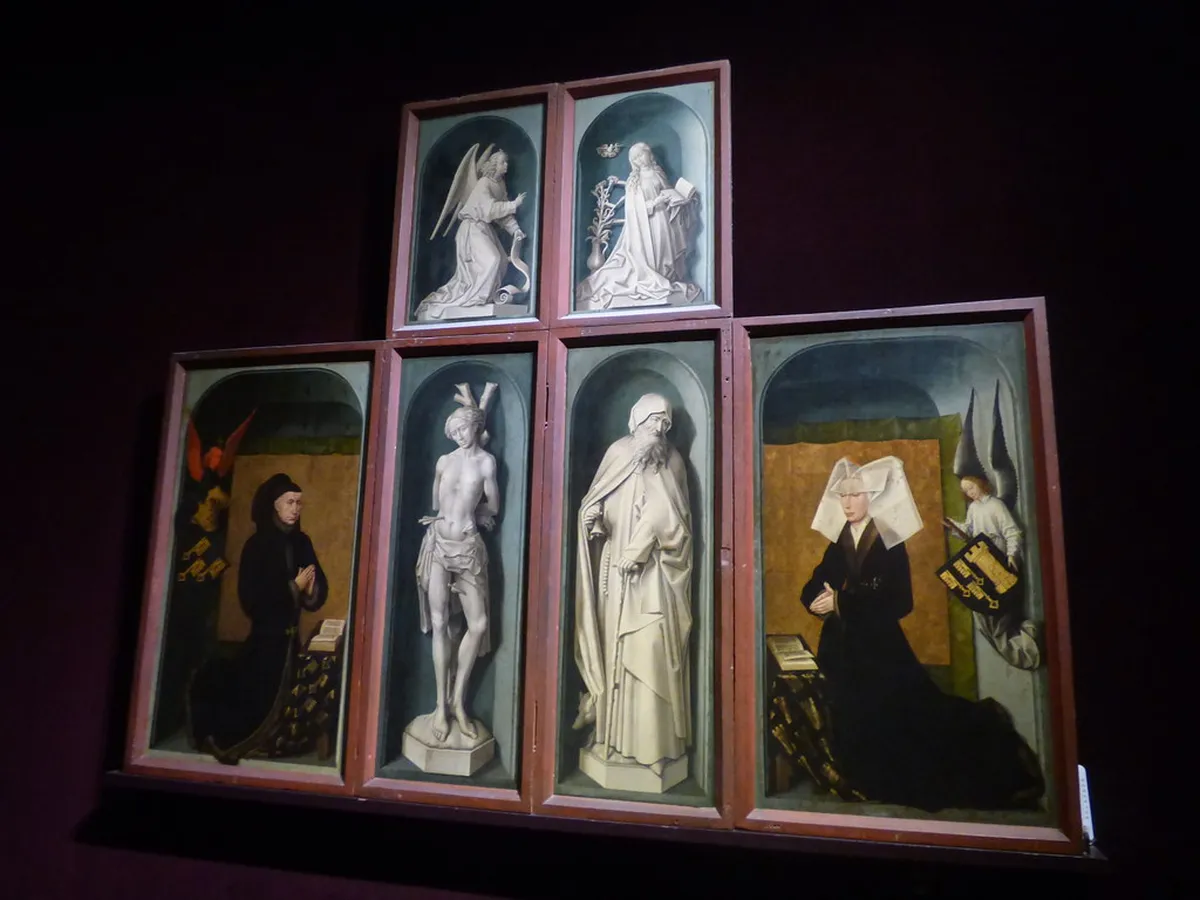
When the panels are closed, the outside shows different scenes. You can see portraits of Nicolas Rolin and his wife. They are shown kneeling in prayer next to statues. This part of the painting uses more muted colors like grey. This technique is known as grisaille and mimics the look of stone.
The Artist Rogier van der Weyden and His Style
Rogier van der Weyden was a leader in the Flemish school. He was known for using oil paints to create tiny details. You can see individual hairs and tears on the painted faces. This level of realism was revolutionary in the 15th century. His work influenced many other artists across Europe.
The artist focused heavily on the emotions of his subjects. He did not just paint static figures for the church. Instead, he showed the deep psychological states of people. This makes the Polyptych of Last Judgment Beaune very relatable today. Visitors are often moved by the grief shown in the hell panels.
The use of light in this painting is also masterful. Van der Weyden used thin layers of glaze to build color. This allows light to reflect through the paint and glow. The gold background in the heaven scenes seems to shine naturally. This effect is a hallmark of high-quality Flemish art.
During your 2025 visit, look for the subtle brushstrokes. The artist used very fine brushes to achieve this finish. He worked slowly to ensure every inch was perfect. This dedication is why the work has lasted for centuries. It remains a top reason for visiting Hotel-Dieu de Beaune museum.
Hospices de Beaune Architecture and the Painting
The altarpiece is deeply connected to its physical surroundings. The Hotel-Dieu is a masterpiece of Gothic design and color. It features famous roofs with colorful glazed tiles in patterns. These patterns reflect the same luxury found in the painting. The building and the art work together as one unit.
The Salle des Pôvres is the main hall where patients stayed. Its high wooden ceiling looks like an upside-down ship hull. The painting was once the focal point of this long room. It provided a spiritual center for the entire charitable institution. The scale of the room matches the grand size of the art.
The architecture provides the perfect backdrop for such a dark theme. High windows let in soft light that changes during the day. This natural light highlights different parts of the painted panels. You can appreciate the Beaune historical architecture while walking to the painting. The transition from the courtyard to the gallery is very impressive.
In 2025, the gallery uses modern tools to show the art. Special lighting protects the paint while making it easy to see. You can now view the panels from a close distance. This allows you to see things the original patients could not. The modern museum design honors the historic setting perfectly.
Modern Preservation of the Masterpiece
Keeping a 600-year-old painting safe is a difficult task. The museum uses strict climate controls in the display room. Sensors monitor the temperature and humidity levels every hour. This prevents the wooden panels from warping or cracking over time. Preservation is a constant job for the local experts.
The painting has undergone several major cleanings in the past. Experts carefully removed layers of old, yellowed varnish. This process revealed the original bright colors underneath. Today, the blue and gold look as fresh as they did originally. You can truly appreciate the artist's original vision now.
Special glass protects the panels from dust and human touch. This glass is non-reflective so it does not block the view. Visitors can get very close to the art without any risk. This balance between protection and access is very well managed. It ensures future generations can enjoy the work too.
In 2025, digital tools help visitors understand the restoration work. You can see photos of the painting before it was cleaned. These displays explain the science behind the art history. It adds a deep layer of education to your visit. The museum prides itself on these high-tech educational displays.
Essential Tips for Your 2025 Visit to Beaune
Plan to spend at least two hours inside the Hotel-Dieu. This gives you enough time to see the painting and buildings. The museum is located in the heart of the city center. It is easy to reach by foot from most hotels. You should buy your tickets online to avoid long lines.
The entrance fee for adults is approximately 12 Euros in 2025. This price includes an excellent audio guide in many languages. The guide explains the symbolism of the polyptych in great detail. It is a very helpful tool for first-time visitors to France. Discounts are often available for students and large families.
The museum is open every day from 9 AM to 6:30 PM. Try to arrive early in the morning for a quiet experience. Mid-afternoon can be very crowded with tour groups and school trips. Photography is allowed but you must turn off your flash. Flash can damage the old pigments in the wooden panels.
While in town, explore more than just the main museum. Beaune is famous for its wine and historic narrow streets. You can find many spots for photography of Beaune buildings nearby. The city offers a perfect mix of art and French culture. Make sure to wear comfortable shoes for the cobblestone roads.
Frequently Asked Questions
Where is the Polyptych of Last Judgment Beaune located?
The painting is kept inside the Hotel-Dieu museum in Beaune, France. This building is also known as the Hospices de Beaune. It is a central landmark in the Burgundy wine region. You can find it easily near the main town square.
Who painted the Last Judgment altarpiece in Beaune?
The famous Flemish artist Rogier van der Weyden created this work. He painted it between the years 1443 and 1451. He was one of the most respected painters in Northern Europe. His work is known for its incredible detail and emotion.
Can I take photos of the painting inside the museum?
Yes, you can take photos for personal use in 2025. However, you must never use a flash when taking pictures. The bright light can fade the ancient paint over many years. Always follow the signs posted inside the display gallery.
How much does it cost to see the painting?
A standard adult ticket costs about 12 Euros in 2025. This fee covers the entire museum site and the audio guide. It is a great value for seeing such important history. Prices may change slightly during special events or exhibitions.
The Polyptych of Last Judgment Beaune is a true treasure of France. It combines historical importance with stunning artistic beauty. Visiting this masterpiece in 2025 is a highlight for any traveler. It offers a unique look into the faith and art of the past. Plan your trip to Beaune to witness this incredible work in person soon.
Key Takeaways
- The painting was created by Flemish master Rogier van der Weyden.
- It is located in the historic Hotel-Dieu museum in Beaune, France.
- The artwork consists of nine detailed panels showing the final judgment.
- Nicolas Rolin commissioned the piece for a local hospital in 1443.
- The museum provides an audio guide to explain the deep symbolism.
Related reads: streetartly.com, street art and architecture in beaune.