
10 Best Medieval Buildings in Carcassonne to Visit
Explore the best medieval buildings in Carcassonne for 2025. See stunning castles and cathedrals in this historic French city. Book your tour today!
On this page
Carcassonne is a beautiful gem in southern France that showcases incredible history and stunning stone architecture today. Visiting the best medieval buildings in Carcassonne allows you to step back into the fascinating world of knights. This guide highlights the most significant structures that every traveler should see during their 2025 vacation here.
The fortified city sits on a hill overlooking the Aude River and provides breathtaking views for every visitor. You will find narrow cobblestone streets lined with ancient houses that look exactly like a classic movie set. It remains one of the most preserved medieval sites in the entire world according to most history experts.
Many people travel from across the globe to witness the grand scale of these massive limestone fortifications and towers. You should plan to spend at least two full days exploring the various corners of this historic French citadel. The local atmosphere feels truly magical as you walk through the massive gates and enter the historic city center.
The Majestic Château Comtal Fortress
The Château Comtal remains the most impressive structure within the massive defensive walls of the old city today. This fortress was originally constructed during the twelfth century by the powerful Trencavel family of Southern France. You can explore the interior rooms and walk along the ancient battlements for a small entry fee.
The castle museum displays local archaeological finds that tell the story of the city's long military history. Visitors can learn about the various stages of construction that happened during the history of Carcassonne castle architecture over several centuries. You should definitely watch the short film in the visitor center to understand the strategic importance of this site.
Standard adult tickets for the castle and ramparts cost approximately eleven Euros during the 2025 travel season. You should book your tickets online in advance to avoid long wait times during the busy summer months. The view from the top of the towers offers a perfect perspective of the surrounding Languedoc countryside.
Inside the castle walls you will find a peaceful courtyard that provides a quiet escape from the crowds. This area features beautiful stone carvings and architectural details that highlight the wealth of the original owners. It is a fantastic place for photography because the light hits the stone walls in a very dramatic way.
Basilica of Saints Nazarius and Celsus
This stunning religious building combines Romanesque and Gothic architectural styles into one incredibly beautiful and unique structure. The original church was built in the eleventh century but underwent significant changes during the late middle ages. You will notice the contrast between the heavy stone columns and the delicate stained glass windows inside.
The basilica is famous for having some of the most beautiful stained glass windows in southern France today. These colorful glass panels date back to the thirteenth and fourteenth centuries and depict various famous biblical scenes. Light pours through the glass during the afternoon to create a vibrant display of colors on the floor.
Entry to the basilica is generally free for all visitors but you should consider leaving a small donation. Please remember to dress respectfully and keep your voice low as this remains an active place of worship. You can often hear beautiful organ music during the daily services or special evening concerts in 2025.
Look closely at the external walls to see the intricate gargoyles and decorative carvings that protect the building. These stone figures serve both a functional purpose for drainage and a symbolic purpose to ward off evil. The craftsmanship displayed on the exterior of the basilica is truly world class for its time period.
The Massive Double Defensive Walls
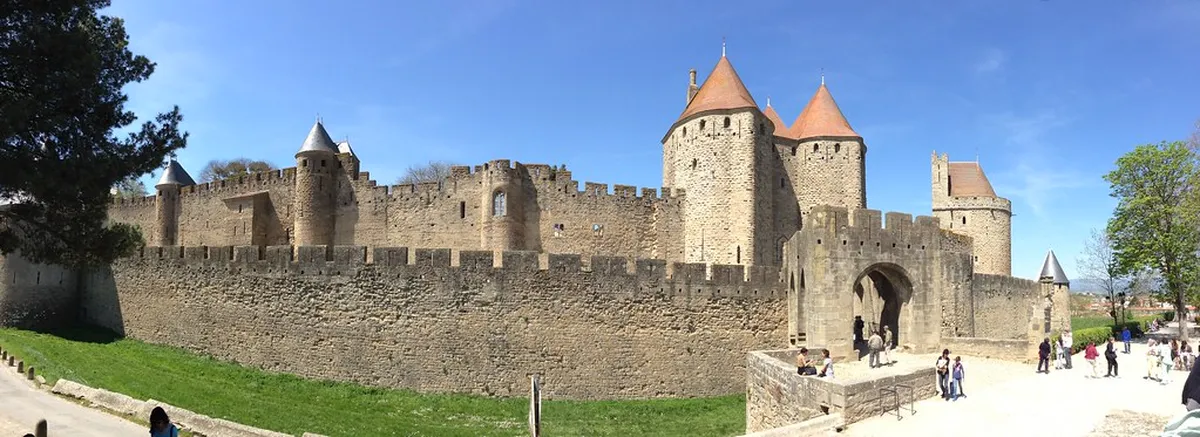
The Cité is famous for its massive double ring of defensive walls that stretch for nearly three kilometers. These fortifications include fifty-two distinct towers that protected the city from invaders for many hundreds of years. You can walk between the inner and outer walls in an area known as the lists today.
The outer wall was built during the reign of Louis IX to create a secondary layer of protection. These walls represent the best medieval buildings in Carcassonne because of their incredible scale and surviving structural integrity. You will find many interesting Carcassonne citadel features while walking along the ancient stone paths.
Exploring the space between the walls is a free activity that offers many great photo opportunities for tourists. You can see the different layers of history where Roman stones are mixed with medieval French masonry work. This area is especially beautiful during the sunset when the limestone walls glow with a deep orange color.
Many sections of the walls were restored in the nineteenth century by the famous architect Viollet le Duc. While some purists argue about the accuracy of his work he certainly saved the city from total ruin. His vision created the iconic skyline that we all recognize and love to visit today in France.
Porte Narbonnaise and the City Gates
The Porte Narbonnaise serves as the main entrance to the medieval city and is a masterpiece of military design. This gate features two massive spur-shaped towers that were designed to deflect projectiles from attacking enemy forces. You must walk across a stone bridge that replaced the original wooden drawbridge many years ago.
Inside the gatehouse you can see the grooves where the heavy portcullis would drop down to stop invaders. These defensive measures made the city almost impossible to capture through a direct frontal assault during the middle ages. It remains one of the most photographed spots in the entire city for modern tourists in 2025.
Look for the bust of Lady Carcas located near the entrance to learn about the local legendary hero. Legend says she saved the city from a long siege by tricking the enemy into thinking they had food. This story is an important part of the local culture and adds to the magic of the gate.
The gate is always open to pedestrians and there is no cost to walk through this historic entranceway. You should try to arrive early in the morning to see the gate without the large daily crowds. The surrounding square features several small cafes where you can sit and enjoy the historic view with coffee.
The Historic Pont Vieux Bridge
The Pont Vieux bridge connects the modern lower town of Carcassonne with the ancient medieval citadel on the hill. This stone bridge was built in the fourteenth century and spans the wide Aude River with several graceful arches. It was originally the only way to cross the river to reach the fortified city from the west.
Walking across the bridge offers the absolute best panoramic view of the medieval fortifications and the castle towers. It is the perfect place to start your Carcassonne walking tour before heading up the steep hill. Many artists gather on the riverbanks near the bridge to paint the iconic skyline of the city.
The bridge is reserved for pedestrians only which makes it a very pleasant walk during any time of day. You can see the marks of ancient floods on the stone pillars that have supported the bridge for centuries. It remains a vital link for locals and tourists who move between the two parts of town.
In the evening the bridge is illuminated with soft lights that reflect beautifully in the calm river water below. This is a very romantic spot for a stroll after enjoying a traditional French dinner in the town. You will feel the history of the city as you cross these ancient stones toward the fortress.
Frequently Asked Questions
Which of the best medieval buildings in Carcassonne is the oldest?
The inner ramparts contain sections of Roman walls that date back to the late third or early fourth century. However the most famous medieval structures like the castle and basilica were mostly built during the twelfth century. These buildings showcase the evolution of military and religious architecture over a very long historical period.
How much does it cost to visit the medieval buildings?
Walking through the city streets and viewing the exterior of the walls is completely free for all visitors. You must pay an entry fee of approximately eleven Euros to enter the Count's Castle and walk the ramparts. The Basilica of Saints Nazarius and Celsus is free to enter although donations are always welcome.
Can I walk on the medieval walls of Carcassonne?
Yes you can walk on the ramparts by purchasing a ticket at the entrance of the Château Comtal. This ticket allows you to access long stretches of the inner walls and explore several defensive towers. It provides incredible views of both the historic city interior and the surrounding French countryside landscape.
Are the medieval buildings in Carcassonne original?
Most of the buildings contain original medieval stones but many sections were heavily restored during the nineteenth century. Architect Viollet le Duc led a massive project to repair the crumbling walls and towers to their former glory. This preservation work is why the city looks so complete and impressive for visitors today in 2025.
Carcassonne remains one of the most incredible travel destinations in France for anyone who loves ancient history and architecture. You should make sure to visit the castle and the basilica to see the very Carcassonne medieval architecture features. Plan your visit for 2025 to experience the magic of this perfectly preserved fortified city for yourself soon.
Key Takeaways
- Book your castle tickets online to avoid long queues during peak summer months.
- Visit the Basilica in the afternoon to see the stained glass with the best light.
- Walk the Pont Vieux bridge at sunset for the most iconic photos of the city.
- Wear comfortable walking shoes because the cobblestone streets are very uneven and steep.
Related reads: streetartly.com, street art and architecture in carcassonne.