
Defensive Architecture of Carcassonne Citadel Guide
Discover the defensive architecture of Carcassonne citadel. Explore 2025 travel tips and history. Plan your medieval adventure in France today!
On this page
The defensive architecture of Carcassonne citadel remains a masterpiece of medieval military engineering in France today. Visitors in 2025 can explore the intricate layers of stone that once protected this historic hilltop fortress. This guide provides essential details about the walls, towers, and gates that define this unique landmark. Learning about the strategic design helps travelers appreciate the scale of this UNESCO World Heritage site.
Many scholars consider this city the best example of a fortified medieval settlement in all of Europe. The complex layout features a double ring of massive stone walls that intimidated any potential invading army. You will find many Carcassonne citadel features that demonstrate the clever tactics used by ancient architects and builders. These fortifications have survived for centuries due to their solid construction and careful restoration by later generations.
The Massive Inner and Outer Ramparts
The defensive architecture of Carcassonne citadel is famous for its impressive double-wall system that surrounds the city. The outer wall was built to provide the first line of defense against any approaching enemy forces. It stretches for nearly three kilometers and features several stone towers that offered clear views of the valley. Soldiers could monitor the landscape from these high points to spot threats before they reached the gates.
Between the two walls lies a flat area known as the lices where knights once practiced their skills. This space served a vital tactical purpose by trapping enemies who managed to breach the first outer wall. Defenders on the taller inner wall could easily target intruders stuck in this narrow and open kill zone. It created a lethal environment that made a successful siege nearly impossible for most medieval armies to achieve.
The inner wall is much older and thicker than the outer ring of fortifications seen by modern visitors. It dates back to the Gallo-Roman period when the city first became a significant strategic military stronghold. Architects later reinforced these ancient stones with modern masonry to improve the structural integrity of the entire fortress. You can see the different layers of history by examining the various stone types used in the construction.
Today, these ramparts offer stunning views of the surrounding countryside for tourists who enjoy walking along the paths. The preservation of these walls allows us to understand the scale of Carcassonne medieval architecture in a modern context. It is important to wear comfortable shoes because the stone paths can be uneven and quite steep in places. Tickets for the wall walks usually cost around twelve Euros for adults during the busy 2025 season.
Iconic Towers and Defensive Positions
The citadel boasts fifty-two distinct towers that served as essential watchpoints for the garrisoned soldiers throughout history. Each tower was designed with a specific purpose, such as housing weapons or providing shelter for the guards. The rounded shape of the towers helped to deflect incoming projectiles fired from catapults or other siege engines. This clever engineering choice significantly reduced the damage caused during long periods of intense medieval warfare and conflict.
Many towers feature narrow arrow slits that allowed archers to fire at enemies while remaining protected behind stone. These vertical openings are wider on the inside to give the archer a broad field of vision and aim. On the outside, the slits are very thin to prevent enemy arrows from entering the tower and hitting soldiers. This asymmetrical design is a hallmark of the defensive architecture of Carcassonne citadel found throughout the whole site.
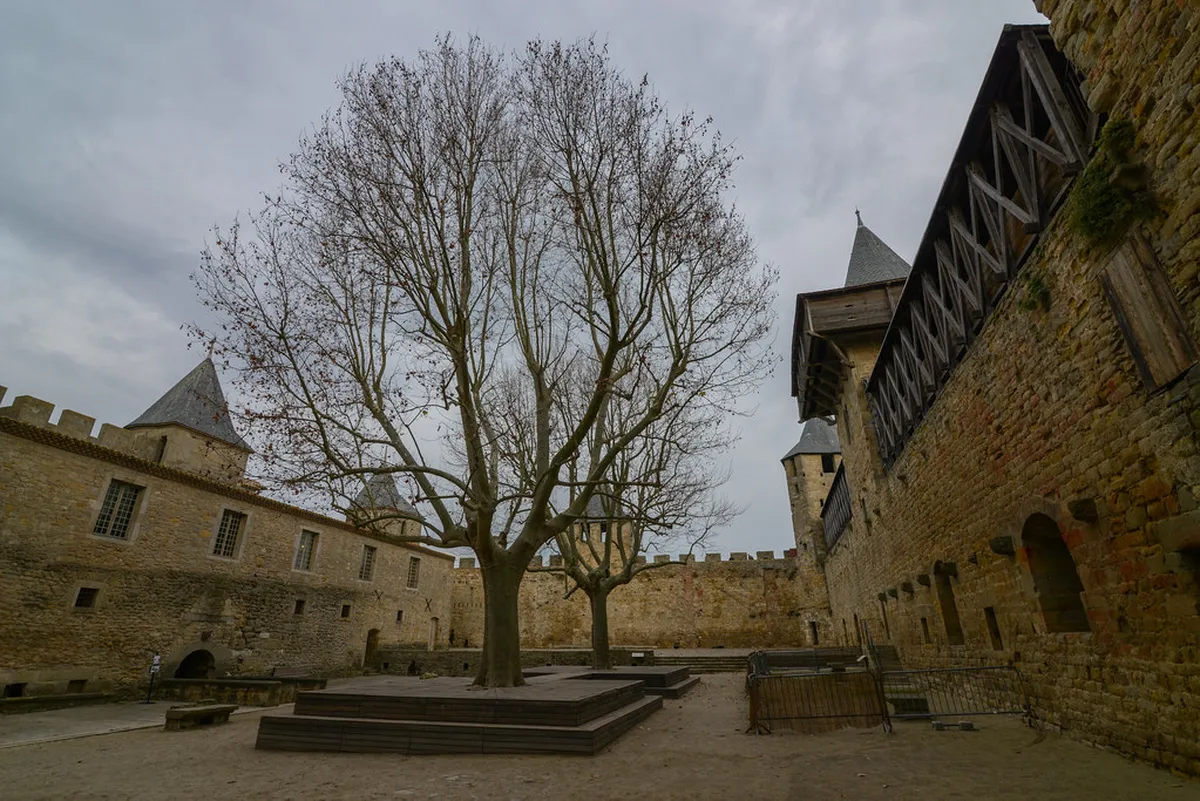
Wooden hoardings were often attached to the tops of the towers to provide extra protection for the defending troops. These structures allowed soldiers to drop heavy stones or boiling liquids directly onto enemies at the wall base. While most original wooden parts have rotted away, you can still see the square holes where the beams rested. Some restored sections now showcase how these formidable wooden galleries looked during the height of the Middle Ages.
The towers vary in height and design depending on when they were built or renovated by different ruling powers. Some feature slate roofs with sharp points, while others have rounded tile roofs typical of the southern French style. Exploring these structures helps you understand what is inside Carcassonne citadel walls and how the garrison lived daily. Each stone tells a story of survival and strength in a time when safety was never fully guaranteed.
Strategic Gates and The Barbican
The Porte Narbonnaise serves as the main entrance to the citadel and represents a pinnacle of military gateway design. This massive structure features two giant spur-shaped towers that could withstand heavy battering from any large siege engine. It also contained a series of portcullises and heavy oak doors to stop intruders from entering the city. The gate was designed to be a fortress within a fortress to ensure the safety of the residents.
Murder holes were built into the ceiling of the gateway to allow defenders to attack anyone who entered. If an enemy broke through the first door, they would be trapped in a small area under fire. This sophisticated layout made the gates the most dangerous part of the fortress for any attacking soldier to enter. The defensive architecture of Carcassonne citadel prioritized these chokepoints to maximize the effectiveness of a smaller defending force.
The Aude Gate offers another entrance that leads directly toward the river and the lower town of Carcassonne. This gate is built into a steep cliffside, making it almost impossible to attack with heavy equipment or horses. It features a winding path that forced attackers to expose their unshielded right side to the city walls above. Medieval engineers used the natural terrain to enhance the artificial defenses of the citadel with great tactical success.
A barbican once stood in front of the castle to provide an extra layer of protection for the main entrance. This circular fortification acted as a buffer zone that enemies had to capture before reaching the primary stone walls. Although the original barbican was later removed, its location remains a vital part of the architectural history of Carcassonne. Visiting these gates in 2025 provides a clear look at the ingenuity of medieval military planners and builders.
Defensive Features of the Château Comtal
The Château Comtal is a castle located within the citadel that served as the final refuge for the nobility. It features its own moat and defensive walls to protect the ruling family from both external and internal threats. This castle was built during the twelfth century and has undergone many changes to improve its overall defensive capabilities. It stands as a powerful symbol of authority and military might in the heart of the medieval city.
A unique feature of the castle is the chemise, which is an additional wall built closely around the main structure. This extra layer prevented attackers from using ladders or siege towers effectively against the high castle walls and towers. The narrow space between the walls made it difficult for large groups of soldiers to move or fight together. The defensive architecture of Carcassonne citadel reached its most complex form within this central and heavily guarded palace.
The castle also contains a large courtyard that could house many soldiers and supplies during a long-term enemy siege. Deep wells provided a reliable source of water, which was essential for survival when the city was completely surrounded. Large cellars were used to store grain, wine, and salted meats to feed the garrison for many months. These logistical details were just as important as the stone walls for maintaining a successful and long defense.
Visitors can take guided tours of the castle to see the interior rooms and the high defensive wooden galleries. These tours provide excellent insights into the daily life and military duties of the knights who lived there. It is highly recommended to book your tickets online in advance to avoid long queues during the summer. Exploring the castle is the best way to see the most advanced features of the entire citadel complex.
Restoration and Architectural Evolution
In the nineteenth century, the citadel was in a state of ruin and faced the threat of total demolition. The architect Eugène Viollet-le-Duc led a massive restoration project to save the city and its unique defensive architecture. He spent many years rebuilding the walls, towers, and gates to return the fortress to its former medieval glory. His work is the reason why Carcassonne looks so complete and impressive for modern travelers visiting in 2025.
Some historians criticize Viollet-le-Duc for adding features that were not historically accurate for this specific region of France. For example, the pointed slate roofs on the towers are more common in northern France than in the south. However, his vision successfully preserved the structural integrity of the site for future generations to study and enjoy. Without his intervention, the defensive architecture of Carcassonne citadel might have been lost to the passage of time.
Modern preservation efforts focus on maintaining the stonework and preventing erosion caused by the weather and thousands of visitors. Specialist masons use traditional techniques to repair the lime mortar and replace any damaged stones with local materials. These ongoing projects ensure that the citadel remains safe for the public while respecting the historical methods of construction. It is a delicate balance between tourism needs and the strict requirements of historical conservation and site management.
The evolution of the citadel from a Roman fort to a medieval powerhouse and a modern monument is fascinating. Each era added new defensive technologies that are still visible in the walls and towers of the city today. Understanding these changes helps you appreciate the deep history and the strategic importance of this site in European history. The citadel remains a living museum that continues to educate and inspire people from all over the world.
Frequently Asked Questions
Why does the Carcassonne citadel have two sets of walls?
The double-wall system was designed to provide extra security and create a trap for invading soldiers. If attackers breached the outer wall, they were caught in the open space between the two ramparts. This allowed defenders on the inner wall to easily eliminate the intruders from a safe distance above. You can learn more by exploring Carcassonne citadel architectural details during a guided walking tour of the site.
How many towers protect the defensive architecture of Carcassonne citadel?
There are exactly fifty-two towers located along the inner and outer walls of the historic medieval citadel today. Each tower had a specific role in the defense of the city, such as acting as a watchpoint. These structures vary in size and design based on the time period in which they were originally built. They represent centuries of military evolution and stone masonry skills in the southern region of France.
Can visitors walk on the defensive walls of the citadel?
Yes, visitors can walk along large sections of the ramparts to experience the defensive views for themselves in 2025. This activity requires a ticket, which also includes entrance to the Château Comtal and the museum inside. The paths offer a unique perspective on the city's layout and the surrounding landscape of the Aude department. It is one of the most popular activities for tourists visiting this UNESCO World Heritage site.
The defensive architecture of Carcassonne citadel is a remarkable testament to the skill and ingenuity of medieval builders. From the massive double walls to the strategic gates, every element was designed with protection and survival in mind. Visiting this site in 2025 offers an unforgettable journey into the past for history lovers and casual travelers. Make sure to explore every corner of the ramparts to truly appreciate the scale of this ancient stone fortress. Plan your trip today and experience the magic of one of the most beautiful cities in France.
Key Takeaways
- The double-wall system provided a lethal 'kill zone' to trap and eliminate invading medieval forces effectively.
- Fifty-two unique towers offer specialized defensive positions and strategic views of the surrounding French countryside.
- Restoration by Viollet-le-Duc in the 19th century saved the fortress from being destroyed and lost forever.
- Strategic gates like Porte Narbonnaise utilized multiple layers of protection including portcullises and hidden murder holes.
Related reads: streetartly.com, street art and architecture in carcassonne, significance of carcassonne citadel design.