
Romanesque Architecture Examples Carcassonne France
Discover Romanesque architecture examples Carcassonne France offers. See historic sites and learn about medieval building styles. Plan your 2025 visit now!
On this page
Carcassonne stands as a crown jewel of medieval design in southern France. This fortress city showcases many layers of history within its ancient walls. Travelers often come to see Romanesque architecture examples Carcassonne France famously preserves. These structures tell a story of strength and spiritual devotion from centuries past.
The city represents a unique blend of different historical eras. You will find Roman, medieval, and Gothic influences here. However, the Romanesque period provides the essential skeleton for many landmarks. Understanding these styles makes your walk through the Citadel more meaningful.
As you plan your 2025 trip, look for specific stone features. The rounded arches and thick walls define this early medieval phase. This guide explores the best sites to see these ancient building techniques. Prepare to step back in time within this walled wonder.
Foundations of Carcassonne Architectural Styles
Romanesque design defines much of the city's early medieval character. This style emerged during the 11th and 12th centuries. It features thick walls, rounded arches, and sturdy pillars. These elements were essential for defense and structural support.
You will notice small windows that kept interiors cool and protected. The heavy stone masonry creates a sense of permanence and grandeur. Builders used local materials to create these massive, enduring monuments. You can learn more about Carcassonne architectural styles throughout the Citadel.
The style is often called the architecture of the fortress. Architects in the 1000s focused on stability over height. They built walls that were often several meters thick. This allowed the structures to last for nearly a thousand years.
Romanesque buildings in Carcassonne often feature simple, repetitive geometric patterns. You might see checkers or zig-zags carved into the stone. These decorations add texture to the otherwise plain surfaces. They show the artistic tastes of the high Middle Ages.
Many of these structures underwent changes during the 19th-century restoration. Architect Viollet-le-Duc saved these buildings from total ruin. He respected the original Romanesque shapes while adding new life. His work ensures we can still enjoy these sites today.
The Basilica of Saints Nazarius and Celsus
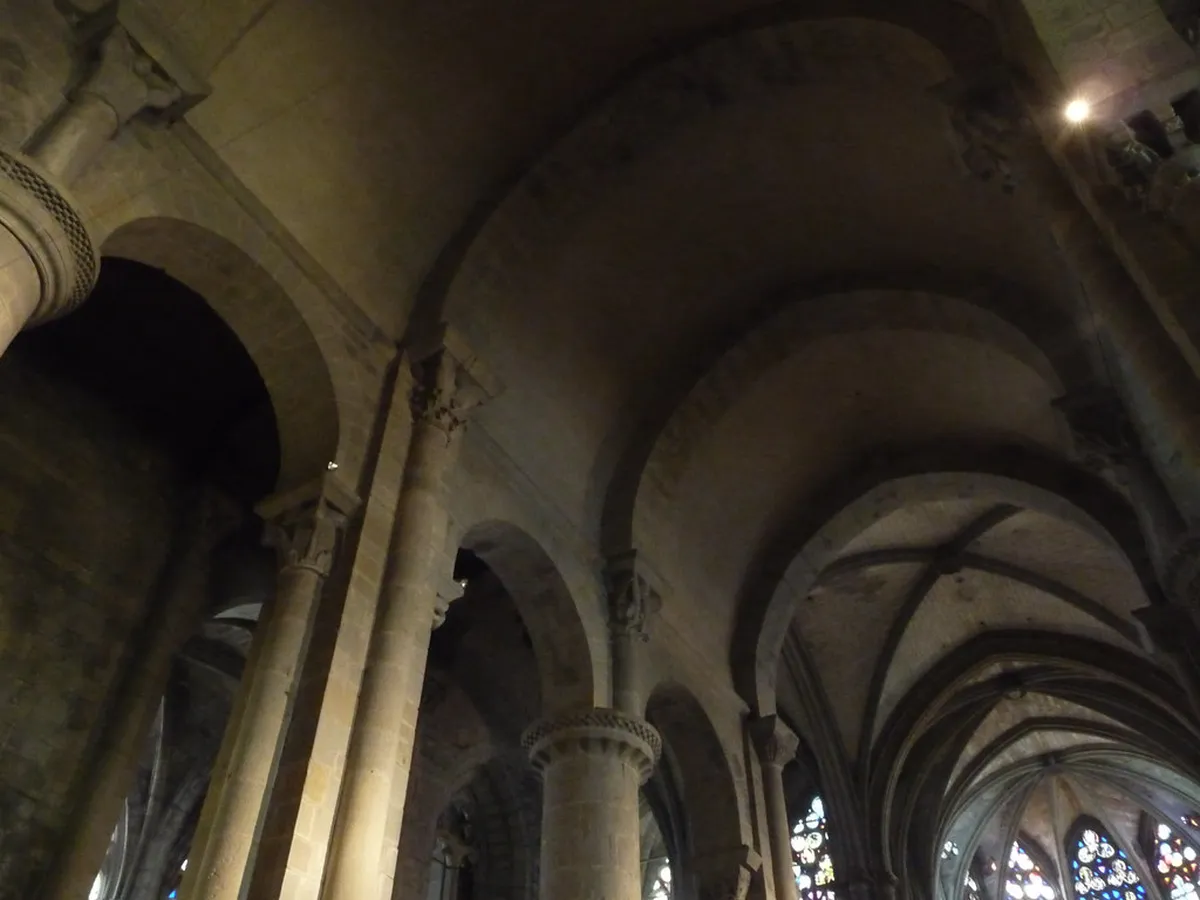
The Basilica of Saints Nazarius and Celsus is a primary Romanesque site. Its nave is a masterpiece of the 11th-century building style. You will see heavy barrel vaults supported by square pillars. These features represent the classic Romanesque aesthetic perfectly.
The church interior feels dim but very sacred and powerful. Notice the lack of large windows in the Romanesque section. This contrasts sharply with the later Gothic additions found nearby. The stone carvings on the capitals depict intricate biblical scenes.
Entrance to the Basilica is usually free for all visitors. It remains open daily from 9:00 AM until late afternoon. Expect to spend at least 45 minutes exploring the details. This site is a must-see for fans of medieval art.
Look closely at the columns in the central nave. They alternate between cylindrical and square shapes for visual variety. This was a common technique used by Romanesque builders in France. It creates a rhythm as you walk toward the altar.
The exterior of the church also shows Romanesque masonry techniques. Look for the older, smaller stones at the base of the walls. These stones were laid by hand nearly nine hundred years ago. They represent the humble beginnings of this grand religious structure.
Architectural Details of the Chateau Comtal
The Chateau Comtal serves as the inner fortress of the city. While it has many layers, Romanesque elements remain visible in its core. Look for the rounded arches in the older sections of the palace. These arches support the massive weight of the stone ceilings.
The castle walls reflect the defensive needs of the 12th century. Builders focused on thick stone barriers to withstand long sieges. You can explore these features on a Carcassonne walking tour through the inner sanctum. Tickets for the castle cost approximately 11 euros in 2025.
Inside the castle, visit the lapidary museum for more examples. You will find stone carvings and statues from the Romanesque era. These artifacts show the high level of skill medieval masons possessed. The museum provides context for the city's overall structural development.
Notice the specific shape of the window openings in the castle. They are wider on the inside than on the outside. This design allowed archers to aim while remaining safe. It is a perfect example of functional Romanesque military design.
The inner courtyard reveals the scale of the original palace. Heavy stone arches line the walkways around the central space. This area served as the heart of the Trencavel dynasty's power. Walking here feels like stepping into a medieval storybook.
The Ancient Walls and Romanesque Fortifications
The outer defenses of Carcassonne include layers of Romanesque masonry. Large, squared stones mark the work of 11th-century engineers. These fortifications were built to protect the Trencavel family and their subjects. They highlight the functional side of Romanesque architecture.
Walk between the inner and outer walls to see the scale. This space is known as the lists or Lices in French. You can observe the transitions between different historical building phases. The Romanesque sections feel much more grounded and solid than later parts.
Guided tours provide deep insights into these defensive building techniques. Most tours depart from the main Narbonne Gate near the entrance. Prices for professional guides range from 15 to 25 euros. Wear comfortable shoes as the ground is often uneven stone.
Look for the towers that have square bases. These are typically the older, Romanesque parts of the wall system. Later Gothic towers are often completely round for better defense. Seeing the two styles together is very educational for visitors.
The walls are nearly three kilometers long in total. Take a walk along the ramparts for the best views. You can see how the Romanesque sections merge into the landscape. This walk is one of the best things to do in 2025.
Identifying the Romanesque Aesthetic in Detail
Distinguishing between styles helps you appreciate the city's complex history. Romanesque structures use rounded arches while Gothic features pointed ones. You will see this transition clearly within the Basilica unique layout. This blend makes the city a living museum of design.
Gothic windows are much larger and use stained glass extensively. Romanesque windows are narrow slits designed for defense and stability. Understanding the evolution of Carcassonne building styles enriches your travel experience. Both styles coexist beautifully within the narrow medieval streets.
Search for the grotesque carvings on the stone cornices. These small faces and animals are typical of Romanesque art. They were meant to ward off evil spirits from the buildings. You can find them hidden high up on the exterior walls.
The colors of the stone also tell a story. Romanesque sections often use a local sandstone with a warm hue. Over time, the stone has weathered to a beautiful golden brown. This color glows beautifully during the sunset hours in Carcassonne.
Observe the thickness of the doorways throughout the city. Most Romanesque doors are recessed deep into the stone walls. This creates a layered effect with multiple arches called orders. It adds a sense of depth to the building entrance.
Frequently Asked Questions
Where can I find Romanesque architecture examples Carcassonne France?
The best examples are in the Basilica of Saints Nazarius and Celsus. You should also visit the Chateau Comtal lapidary museum. The inner walls of the Citadel contain many original Romanesque sections. These sites are all within the main walled city.
What defines the Romanesque style in Carcassonne?
Look for rounded arches and thick stone walls. The buildings have small windows and heavy pillars for support. You will see simple geometric carvings on the stone capitals. It feels much heavier and more solid than later Gothic styles.
How much does it cost to see these architectural sites?
The Basilica is free to enter for most visitors. The Chateau Comtal requires a ticket which costs about 11 euros. Walking the city streets and outer walls is free. Guided tours of the architecture usually cost between 15 and 25 euros.
Can I see Romanesque architecture on a walking tour?
Yes, most walking tours focus on the evolution of styles. Guides will point out the specific differences between Romanesque and Gothic. It is a great way to learn about the city history. Wear comfortable shoes as the paths are often steep.
Carcassonne offers an incredible journey back to the medieval world. Exploring Romanesque architecture examples Carcassonne France provides deep historical insight. Plan your trip to see these enduring stone wonders today. You can explore more about Carcassonne medieval architecture to prepare for your visit. The city remains one of the best-preserved historic sites in Europe. Experience the magic of the Middle Ages in person this year.
Key Takeaways
- Visit the Basilica for the best Romanesque interior features.
- Look for rounded arches to identify the 11th-century style.
- Explore the Chateau Comtal museum for ancient stone carvings.
- Walk the ramparts to see the massive defensive Romanesque walls.
- Book a guided walking tour for expert architectural insights.
Related reads: streetartly.com, street art and architecture in carcassonne.