
Notre-Dame-du-Port Basilica Architecture Details
Explore Notre-Dame-du-Port Basilica architecture details in Clermont-Ferrand. Discover Romanesque history and stone carvings in our 2025 travel guide. Book today!
On this page
The Notre-Dame-du-Port Basilica stands as a hidden treasure in central France. This church is a masterpiece of Romanesque design. It showcases incredible Notre-Dame-du-Port Basilica architecture details for every modern traveler. You will find it tucked away in the historic Port district of Clermont-Ferrand.
Construction of this site began in the late 11th century. It serves as a classic example of the Auvergne Romanesque style. This style features unique proportions and beautiful stone work. Many visitors come here to experience the spiritual atmosphere and artistic history.
In 2025, the basilica remains a top cultural destination. It is part of the UNESCO World Heritage list. The site connects to the famous Way of Saint James pilgrimage route. Exploring this space offers a deep look into medieval French craftsmanship.
Romanesque Architecture Clermont-Ferrand Context
The region of Auvergne is famous for its specific building style. You can find many examples of Romanesque architecture Clermont-Ferrand throughout the city. This style relies on thick walls and rounded arches. It creates a sense of strength and eternal peace.
Notre-Dame-du-Port is one of the five major Romanesque churches here. These buildings share common traits like the Latin cross floor plan. They also feature a raised choir area and radiating chapels. This design allowed pilgrims to walk around the sacred relics easily.
The basilica uses local sandstone called arkose. This material gives the walls a warm, golden hue. It differs from the dark lava stone used in other city landmarks. This color choice makes the church stand out against the urban landscape.
The harmony of the building is its most striking feature. Architects focused on balance and geometric precision. Every arch and pillar serves a specific structural purpose. It represents a perfect union of form and function from the medieval era.
Restoration efforts have kept these structures in excellent condition. Specialists worked hard to clean the stone and fix the roof. This ensures that the basilica survives for future generations to enjoy. You can still see the original medieval spirit in every corner.
Exterior Design and Volvic Stone Accents
The exterior of the basilica features intricate mosaic decorations. These mosaics use different shades of volcanic rock. You will see black, white, and red stones forming complex patterns. This decorative technique is unique to the Auvergne region.
Builders used Volvic stone Romanesque buildings techniques for the dark accents. This volcanic rock is incredibly durable and weather resistant. It provides a sharp contrast to the lighter arkose sandstone. These details highlight the gable ends and the window frames.
The east end of the church is especially impressive. It features a tiered structure known as the chevet. This part of the building looks like a collection of smaller chapels. It rises toward the central bell tower in a rhythmic way.
The octagonal bell tower was rebuilt in the 19th century. It follows the original design closely to maintain historical accuracy. It serves as a landmark for those walking through the city streets. The tower adds a vertical elegance to the heavy stone base.
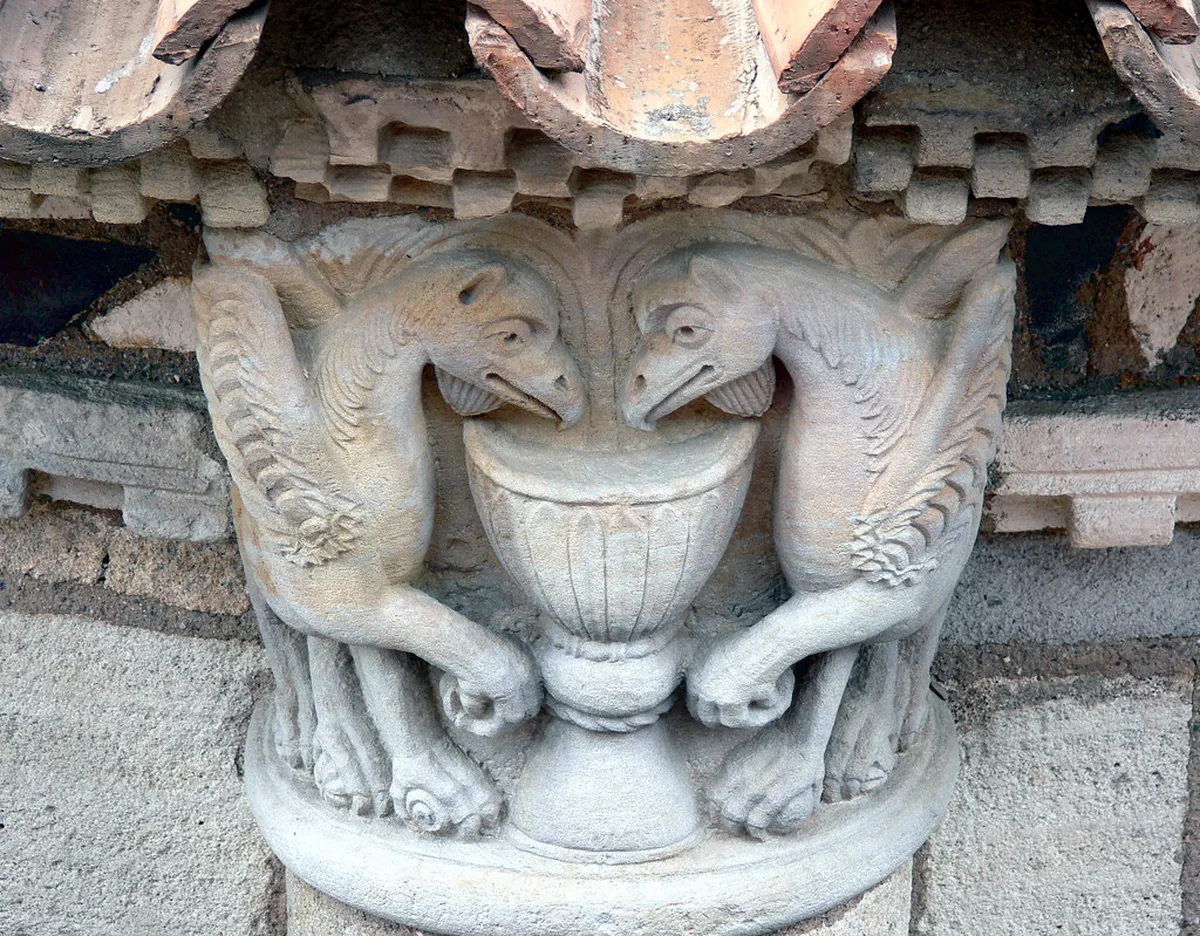
Walking around the outside reveals many hidden stone carvings. Look for the small human heads and animal figures near the roofline. These are called modillions and often carry symbolic meanings. They show the playful side of medieval stone carvers.
The Narrative Capitals and Sculptural Mastery
The interior capitals are the most famous Notre-Dame-du-Port Basilica architecture details. These stone carvings sit at the top of the nave columns. They depict scenes from the Bible and moral allegories. The level of detail in these sculptures is truly remarkable.
One capital shows the story of the fall of man. It depicts Adam and Eve in the Garden of Eden. The sculptor captured their expressions of regret with great skill. You can see the leaves and the serpent clearly in the stone.
Another set of carvings focuses on the struggle between virtue and vice. These figures appear to be in constant motion. They taught lessons to the medieval worshippers who could not read. Today, they serve as a window into ancient beliefs and values.
The capital of the Assumption is a highlight for many visitors. It shows the Virgin Mary being carried to heaven by angels. The composition is circular and fits the shape of the column perfectly. It demonstrates the technical mastery of the 12th-century artists.
Light enters the nave through high windows to illuminate these carvings. The best time to see them is during the morning hours. The sunlight hits the stone at an angle that reveals the textures. This light play creates a dramatic and moving experience for guests.
Sacred Spaces and Interior Layout
The interior of the basilica feels vast and quiet. It uses a three-aisle layout with a very high central nave. The barrel vaulting helps to carry the sound of choir music. This creates an immersive acoustic environment during religious services.
The choir is the most sacred part of the interior space. It is raised slightly above the level of the nave. It is surrounded by an ambulatory that features four radiating chapels. This layout is typical of large pilgrimage churches in France.
You should take a medieval architecture walk to find the crypt. The crypt is located directly beneath the main altar. It houses a 14th-century statue of the Black Madonna. Many people come here to pray and light candles in the dim light.
The walls inside remain mostly plain and unadorned. This simplicity directs the eye toward the altar and the capitals. It creates a space for meditation away from the busy city. The cool temperature inside provides a nice break during the summer months.
The transition from the dark nave to the bright choir is intentional. It symbolizes the journey from the earthly world to the divine. The architects used light as a building material just like stone. It is a key part of the overall design strategy.
Comparing Local Religious Landmarks
Clermont-Ferrand is home to several significant religious buildings. The most famous is the Cathedral of Notre-Dame with its dark spires. This cathedral is Gothic and looks very different from the basilica. It is made entirely of dark volcanic stone from nearby Volvic.
The basilica offers a much older perspective on church design. While the cathedral is tall and thin, the basilica is wide and solid. Both buildings reflect the history of the Auvergne province. They show how architectural tastes changed over several hundred years.
The basilica feels more intimate than the massive cathedral. It allows for a closer look at the masonry and sculpture. You can touch the ancient stones and feel the history. It is a more human-scaled experience for the traveler.
Both sites are within walking distance of each other. You can visit both in a single afternoon. This allows you to compare the Romanesque and Gothic styles directly. It is a great way to learn about French art history.
Visiting the basilica is often a more peaceful experience. It sees fewer large tour groups than the main cathedral. This quiet atmosphere helps you appreciate the architecture more deeply. It is a perfect spot for photography and quiet reflection.
Frequently Asked Questions
What is the best time to see the Notre-Dame-du-Port capitals?
The best time to visit is on a sunny morning. Sunlight enters the high windows and lights up the stone. This makes it easier to see the small details. The basilica is usually less crowded before noon.
Is there a fee to enter the Notre-Dame-du-Port Basilica?
No, there is no entry fee for the basilica. It is free for all visitors to explore the nave and crypt. Donations are welcome to help with the building maintenance. Always check for local holiday hours before your visit.
Why is the basilica made of light stone and not dark lava stone?
The builders used arkose sandstone for the main walls. This material was available in local quarries during the 11th century. Dark Volvic stone became more popular during the later Gothic period. The light stone makes the basilica look very unique.
Can I take photos inside the Notre-Dame-du-Port Basilica?
Yes, photography is allowed for personal use. You should not use a flash or a tripod inside. Be respectful of people who are there for prayer. The crypt is very dark, so a good camera is helpful.
Notre-Dame-du-Port remains a vital piece of French heritage. Its architecture offers a unique look at the medieval world. Make sure to visit this site during your 2025 trip. You will leave with a new appreciation for Romanesque art. Plan your walk through Clermont-Ferrand to see this gem today.
Key Takeaways
- The basilica is a UNESCO World Heritage site and a Romanesque masterpiece.
- Look for the narrative capitals depicting biblical stories in the nave.
- The building uses light arkose sandstone with decorative dark lava stone mosaics.
- The 14th-century Black Madonna statue is located in the quiet underground crypt.
Related reads: streetartly.com.