
12 Best Dijon Buildings: A 2025 Architectural Guide
Discover the best Dijon buildings for your 2025 trip. See historic palaces, gothic churches, and unique facades in this complete architectural guide to Dijon.
On this page
Dijon is a city of stunning history and incredible architecture. In 2025, visitors still flock to see the best Dijon buildings across the historic center. These structures tell the story of the powerful Dukes of Burgundy. You will find medieval timber-framed houses and grand stone palaces everywhere.
Walking through the city feels like traveling through different centuries at once. Each street corner reveals a new piece of French heritage and design. The city is famous for its colorful roofs and intricate stone carvings. This guide will help you find the most impressive sites in town.
The Palais des Ducs et des États de Bourgogne
This palace stands as the most iconic landmark in the entire city. It represents the former power of the Burgundian dukes during the Middle Ages. The building now houses the City Hall and a world-class fine arts museum. You can explore the grand halls and see royal tombs inside.
The palace features a beautiful semicircular square called Place de la Libération. This area is perfect for admiring the massive limestone facade from a distance. The architecture blends medieval elements with classical French styles from later centuries. Many consider this site one of the must-see iconic buildings of Dijon today.
Climbing the Philippe le Bon tower offers the best view of the city. This 46-meter tower provides a panoramic look at the terracotta roofs below. Tickets cost around 5 euros and require a steep climb up stone steps. The effort is worth it for the incredible photos of the city skyline.
The Gothic Beauty of Cathédrale Saint-Bénigne
This cathedral is a masterpiece of Burgundian Gothic architecture from the 13th century. It features a striking roof made of colorful glazed tiles in traditional patterns. The massive towers dominate the western edge of the historic city center. Visitors often marvel at the scale of this ancient stone structure.
Inside, the cathedral hides a very rare and ancient circular crypt. This rotunda dates back to the 11th century and feels incredibly mysterious. It is one of the oldest parts of any religious site in the region. You can see Romanesque carvings that have survived for nearly a thousand years.
The cathedral remains a place of active worship and quiet reflection for many. Entry to the main nave is free for all visitors during the day. However, a small fee applies if you wish to enter the historic crypt. It is a vital stop for anyone studying historic Dijon architecture styles.
Église Notre-Dame and the Famous Owl
Église Notre-Dame is famous for its unique facade covered in rows of gargoyles. These stone figures represent various human emotions and mythical creatures in great detail. The church was built in the 13th century in a compact Gothic style. It remains a favorite spot for photographers and history buffs alike.
The building houses one of the oldest mechanical clocks in all of France. Known as the Jacquemart, this clock features moving figures that strike the bells. On the northern side of the church, you will find the tiny stone owl. Locals believe touching this owl with your left hand brings very good luck.
This church is located right in the heart of the pedestrian shopping district. You will find many small boutiques and cafes surrounding this impressive stone monument. It serves as a perfect landmark while exploring the dijon architecture styles of the old town. The interior is known for its beautiful stained glass windows.
The Grandeur of Hôtel de Vogüé
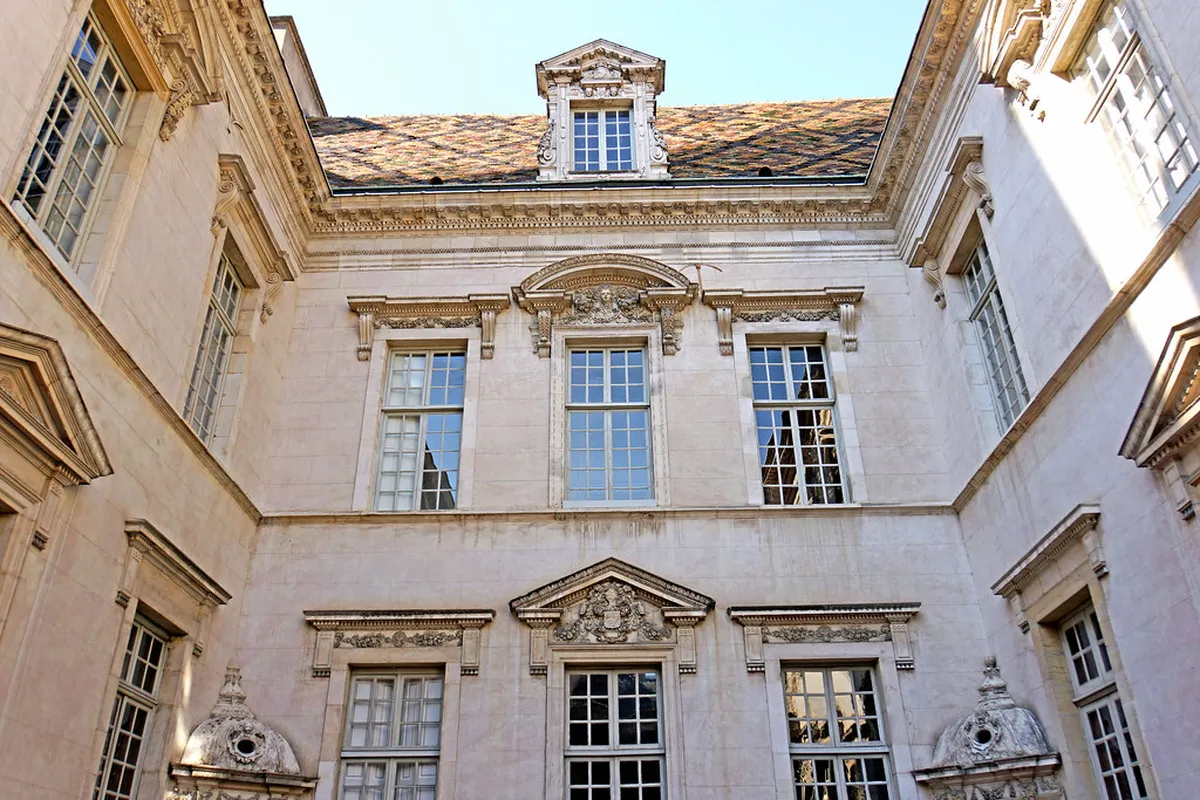
The Hôtel de Vogüé is a stunning example of a 17th-century private mansion. It showcases the wealth and influence of the local parliamentarians during that era. The building features an ornate courtyard and a spectacular roof of glazed tiles. Its design reflects the transition from Renaissance to classical French architecture.
The entrance gate is decorated with intricate carvings of flowers and mythical themes. You can see the attention to detail in every stone block used here. This mansion is often used for public exhibitions and cultural events in Dijon. Visitors can usually enter the courtyard for free to admire the unique facade.
The building sits on a quiet street behind the Église Notre-Dame church. It is one of the many hidden architectural gems dijon offers to curious travelers. Photographers love the play of light on the colorful roof tiles during sunset. It remains a private office space but keeps its historic charm.
Modern Landmarks and Artistic Facades
Dijon is not just a city of ancient stones and medieval timber frames. The city also embraces modern design and contemporary artistic expressions across its neighborhoods. You can find several buildings that blend 21st-century glass with traditional limestone materials. This contrast makes the city streets feel dynamic and constantly evolving.
One notable example is the FRAC Bourgogne building which houses contemporary art collections. Its sleek lines and open spaces offer a different perspective on local design. The city also features several apartment blocks with unique facades to photograph in dijon today. These modern structures often incorporate green spaces and sustainable building materials.
Street art has also begun to change the face of many modern buildings. You can find large murals painted on the sides of standard residential towers. These artworks add vibrant colors to the suburban areas outside the historic center. Check a dijon street art map to find these colorful architectural intersections.
Medieval Timber-Framed Houses of the Old Town
The pedestrian streets are lined with dozens of preserved timber-framed houses. These buildings date back to the 15th and 16th centuries in many cases. Maison Millière is one of the most famous examples located near the church. It features a charming shop and a restaurant inside its wooden walls.
These houses use a construction style known as colombage in the French language. Heavy oak beams create the frame, which is then filled with plaster or brick. Many of these buildings lean slightly over the narrow cobblestone streets below. They provide a glimpse into the daily life of medieval Dijon residents.
You will find the highest concentration of these houses along Rue Verrerie. This street was once home to the city’s glassmakers and skilled craftsmen. Today, it is a bustling area filled with antique shops and art galleries. Walking through this area feels like stepping back hundreds of years in time.
Frequently Asked Questions
What is the most famous building in Dijon?
The Palais des Ducs is the most famous building in the city. It sits in the central square and houses the fine arts museum. Most visitors start their architectural tour at this grand location.
Are the historic buildings in Dijon free to visit?
Many of the churches and public courtyards are free for everyone to enter. Some museums and towers require a small ticket fee for entry. Check local opening times before you visit each specific site.
How long does it take to see the best architecture?
You can see the main highlights in about one full day of walking. The historic center is very compact and easy to explore on foot. Plan for two days if you want to enter every museum.
Can I see modern architecture in Dijon?
Yes, the city features many contemporary buildings like the FRAC Bourgogne center. You can find modern designs mixed with ancient history throughout the newer districts. These sites offer a great contrast to the medieval old town.
Dijon offers a stunning mix of medieval, Renaissance, and modern architectural styles for every visitor. From the grand ducal palace to tiny timber houses, the city is an open-air museum. Plan your 2025 visit to include these incredible landmarks and enjoy the local history. Discover more about the top architectural marvels in dijon france today.
Key Takeaways
- Visit the Palais des Ducs for the best history and views.
- Look for the colorful glazed roof tiles on major cathedrals.
- Touch the stone owl at Notre-Dame for good luck.
- Explore Rue Verrerie for the best medieval timber-framed houses.
- Check out modern art and murals for a contemporary city vibe.