
Carcassonne Castle Design: Complete Guide 2025
Discover the secrets of Carcassonne Castle Design in 2025. Learn about the ramparts, towers, and restoration of this French icon. Plan your trip today!
On this page
Visitors to France often find themselves amazed by the stunning Carcassonne Castle Design during their summer vacations. This medieval fortress stands as a testament to the complex military engineering used centuries ago in Southern France. The site represents a perfect blend of Gallo-Roman foundations and clever medieval additions for defense and power. You will discover how different historical eras shaped the unique silhouette of this famous UNESCO World Heritage site.
The Historical Roots of Carcassonne Castle Design
The foundations of this massive citadel date back to the Gallo-Roman period in the third century. These early builders used small stones and brick layers to create very sturdy defensive structures for the city. This initial phase established the core footprint that modern travelers still see when visiting the fortress today. Exploring the Carcassonne medieval architecture reveals how these ancient layers support much newer stone walls above them.
During the Middle Ages, the Trencavel family expanded the castle to improve their control over the local region. They added the inner palace and several high towers to showcase their immense wealth and significant military influence. These additions transformed a simple Roman fort into a sophisticated residence for the powerful lords of the area. Each new century brought updated building techniques that made the fortress increasingly difficult for enemies to capture easily.
The strategic location of the city made it a vital border defense for the kingdom of France later. King Louis IX and his successors added a second outer wall to provide an extra layer of protection. This double-wall system allowed defenders to trap invading armies in the narrow space between the two stone barriers. Such clever planning makes the site a primary example of advanced European military planning from the thirteenth century.
Architectural Elements of the Inner Citadel
The inner castle features a massive keep that served as the final stronghold for the defenders during attacks. This structure includes several levels of thick stone walls and narrow windows designed for shooting arrows at enemies. Deep moats once surrounded the base to prevent attackers from using heavy siege engines against the main gates. Understanding the Carcassonne citadel features helps visitors appreciate the sheer scale of this defensive construction project.
Wooden galleries called hoardings were often attached to the top of the ramparts during active times of war. These platforms allowed soldiers to drop heavy stones or boiling liquids directly onto enemies trying to scale walls. Today, you can see stone supports along the battlements that once held these essential wooden defensive structures. These details illustrate how the builders prioritized function and safety over simple beauty during the most dangerous eras.
Inside the castle courtyard, the layout provided space for a small village to survive during long enemy sieges. Storage rooms for grain and deep wells for water were built into the very heart of the design. This self-sufficiency allowed the residents to hold out for months against even the most determined invading military forces. Every corner of the interior courtyard served a specific purpose for the daily survival of the castle inhabitants.
The Towers and Gates of the Fortress
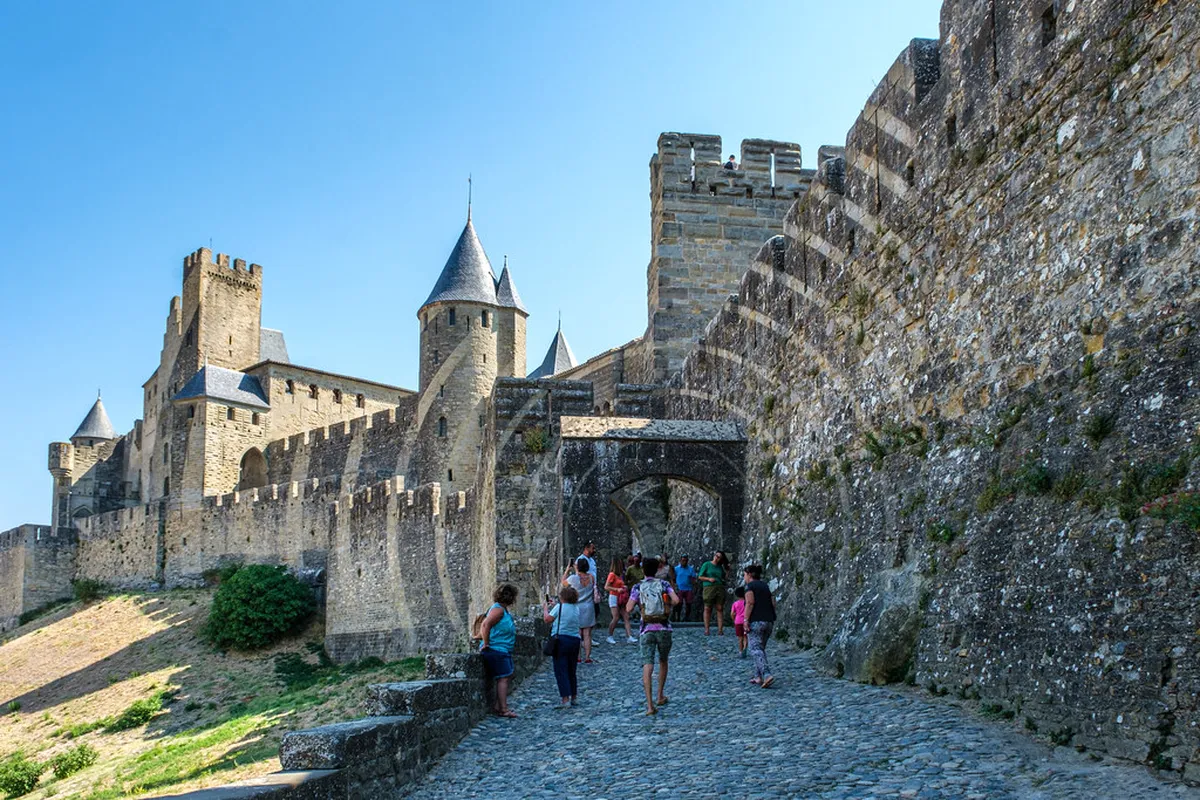
The fortress boasts fifty-two massive towers that vary in shape from round cylinders to sharp square defensive blocks. Round towers were preferred because they lacked weak corners that enemies could easily damage with heavy mining tools. The towers and gates of Carcassonne castle provide stunning views over the surrounding countryside and the Aude river. Many of these towers contain multiple floors with fireplaces to keep the guards warm during cold winter nights.
The Narbonne Gate serves as the main entrance and features two massive towers for maximum security and protection. This gate includes a portcullis, a drawbridge, and several heavy wooden doors to stop any unwanted intruders. Murder holes in the ceiling allowed guards to attack anyone who managed to get inside the main entryway. This layer of security ensured that the gate remained the most defended part of the entire castle complex.
Designers placed the arrow slits at specific angles to cover every possible approach route for an invading enemy. These narrow openings are wide on the inside but very thin on the outside to protect the archers. This clever technique allowed soldiers to aim their weapons while remaining almost entirely hidden from the view below. Modern visitors can still see these precise architectural details while walking along the high stone paths of ramparts.
Viollet-le-Duc and 19th Century Restoration
By the nineteenth century, the city had fallen into a state of severe decay and faced total demolition. The famous architect Eugene Viollet-le-Duc began a massive restoration project in 1853 to save the historic site. His vision for the Carcassonne Castle Design focused on returning the fortress to its ideal medieval appearance and glory. While his work was controversial, it ultimately preserved the citadel for future generations of travelers to enjoy today.
One major point of debate involves the use of pointed slate roofs on the many defensive stone towers. Local historians argued that flat roofs with tiles were more common in this warm region of Southern France. Viollet-le-Duc chose the northern style because he believed it looked more majestic and fit his artistic vision. You can learn more about the preservation of Carcassonne architecture by visiting the museum located inside the castle.
The restoration included rebuilding the upper sections of the walls and fixing the crumbling stone steps for modern use. Workers used traditional materials to ensure the new sections blended somewhat naturally with the original ancient stone foundations. This project took over fifty years to complete and remains one of the largest restoration efforts in Europe. Because of this dedication, the city became a model for how to protect important historical landmarks worldwide.
Visiting Carcassonne Castle in 2025
Planning a trip in 2025 requires booking tickets in advance to avoid the long queues during summer months. Adult entry to the inner castle typically costs around eleven Euros, but prices can vary during special events. The site is open every day except for major holidays like Christmas and New Year in the winter. For the best experience, try to arrive early in the morning before the large tour buses reach the gates.
Walking the full length of the ramparts takes about two hours and requires comfortable shoes for the uneven ground. You will find several spots perfect for photography of Carcassonne architecture along the high walls. These viewpoints offer panoramic scenes of the modern city and the rolling hills of the beautiful Languedoc region. Many areas of the walls are steep, so please watch your step while exploring the higher defensive levels.
The lower city offers plenty of shops and restaurants for a relaxing lunch after your long castle tour. You can find traditional French dishes like cassoulet which is a hearty bean stew famous in this local area. Staying overnight in the old city allows you to see the castle walls lit up beautifully at night. This magical experience makes you feel like you have stepped back in time to the colorful Middle Ages.
Frequently Asked Questions
How long does it take to see the castle?
Most visitors spend between three and four hours exploring the entire citadel and the inner castle museum. This time includes walking along the double walls and seeing the main cathedral in the historic center. If you enjoy taking photos, you might want to allow an extra hour for the best views.
Is the Carcassonne castle free to visit?
Entering the historic medieval city itself is free for all visitors throughout the entire year of 2025. However, you must pay a fee to enter the inner Château Comtal and walk on the high ramparts. These paid sections provide the most detailed look at the Carcassonne castle walls design details for guests.
Was Carcassonne really built for defense?
Yes, every aspect of the design was created to repel invaders and protect the local population from harm. The double walls and tall towers made it one of the most difficult fortresses to conquer in Europe. You can study the Carcassonne ramparts construction methods to see the incredible engineering involved in its defense.
Carcassonne stands as a magnificent example of how history and architecture combine to create a lasting human legacy. The intricate details of the castle walls and towers continue to inspire architects and travelers from around the world. We hope this guide helps you plan an unforgettable journey to this iconic French destination in 2025. Start planning your adventure today to witness this stone masterpiece with your own eyes during your next trip.
Key Takeaways
- The castle features a unique double-wall defense system from the 13th century.
- Restoration by Viollet-le-Duc in the 1800s saved the site from certain destruction.
- Book your 2025 tickets early to avoid long wait times at the Narbonne Gate.