
Carcassonne Castle Walls Design Details: 2025 Guide
Explore Carcassonne castle walls design details in this 2025 guide. Learn about the dual ramparts, Roman masonry, and medieval towers. Visit France today!
On this page
The Cité of Carcassonne stands as a magnificent fortress in Southern France. Its history spans over two thousand years of European conflict. The Carcassonne castle walls design details reveal a story of military innovation and survival. This guide explores the complex engineering of these famous stone ramparts.
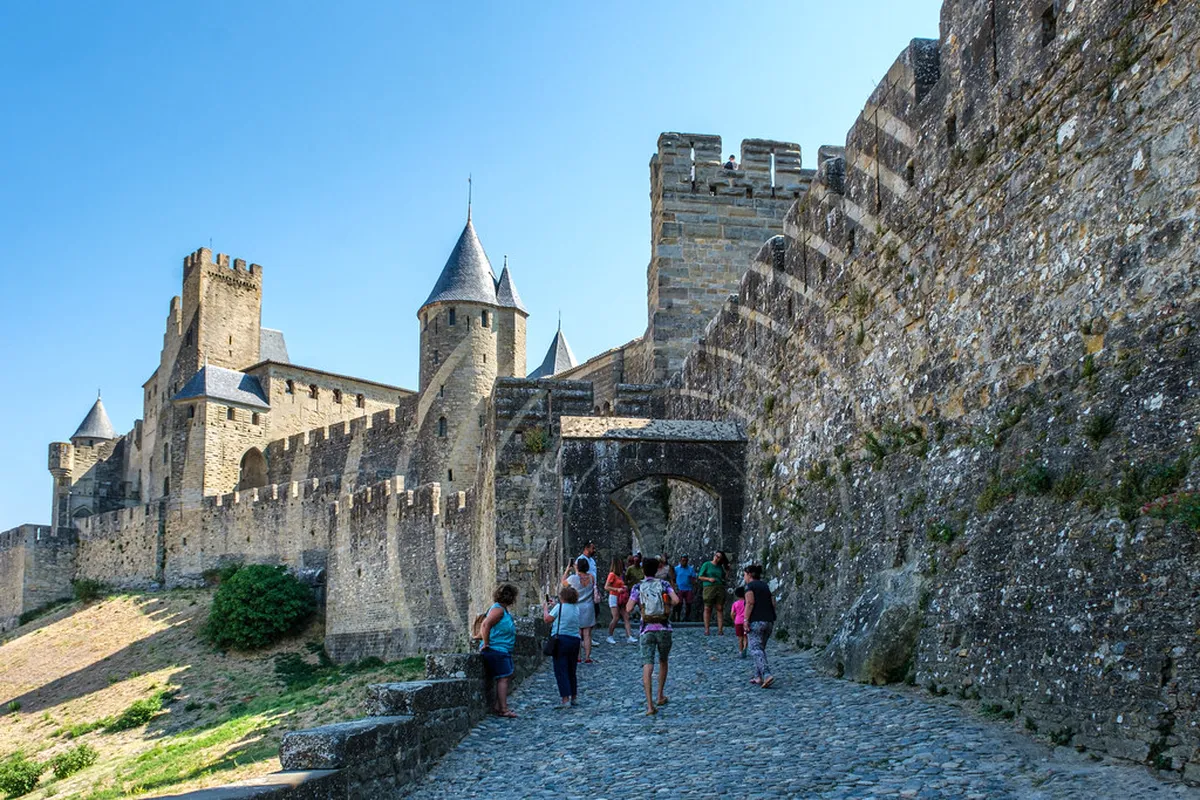
Visitors in 2025 can still walk along the ancient defensive paths today. The site features two distinct layers of massive stone walls for protection. These walls have survived sieges, weather, and the passage of long centuries. Understanding their design helps us appreciate the skill of medieval architects.
Each stone tells a unique story of power and defense in France. The structure remains one of the largest preserved fortresses in all of Europe. You will find incredible examples of both Roman and Gothic building styles here. Let us dive into the specifics of this architectural masterpiece.
The Evolution of the Castle Wall Design
The walls began as a simple Roman fortification in the fourth century. These early builders used small stones and layers of thin red bricks. This Roman style is still visible at the base of the inner wall today. It provided a strong foundation for the larger medieval structures built later.
During the thirteenth century, French kings expanded the defensive perimeter significantly. They added a second, outer wall to create a double ring of protection. This dual-layer system was a revolutionary concept in medieval military architecture. It forced attackers to face two separate lines of heavy fire.
Learn more about the specific Carcassonne castle design elements that make this site unique. The transition from Roman to medieval styles created a fascinating visual timeline. You can see where different eras of masonry meet on the stone surfaces. Each layer represents a new chapter in the history of the city.
The height of the walls was increased to prevent enemies from using ladders. Designers also added steep slopes at the base to stop tunneling attempts. These features made the Cité nearly impossible to capture by direct force. The evolution of the walls shows a constant race between defense and attack.
Today, the walls represent the peak of medieval engineering in the Occitanie region. Architects from all over the world study these structures for their durability. The design remains a testament to the strategic importance of this location. It protected the border between France and Aragon for many decades.
The Inner Ramparts and Structural Mastery
The inner wall is the tallest part of the entire defensive system. It features twenty-nine massive towers spaced closely together for maximum coverage. These towers allowed defenders to fire at enemies from multiple different angles. The height provided a clear view of the surrounding French countryside.
The thickness of these inner walls is truly impressive to behold in person. Most sections are over two meters thick at the very top levels. This bulk allowed the structure to absorb the impact of heavy stone projectiles. The solid core consists of rubble mixed with very strong lime mortar.
The ramparts construction methods used here were highly advanced for the time. Masons carefully squared each limestone block to ensure a very tight fit. This precision prevented enemies from finding handholds or gaps during a climb. The durability of the mortar has kept the stones together for centuries.
Small windows called loopholes were cut into the thick stone at intervals. These allowed archers to stay protected while shooting at the attacking forces. The design of these openings narrowed toward the outside for extra security. Defenders could see out, but attackers could rarely see in.
Walkways along the top of the walls are known as the chemin de ronde. These paths allowed soldiers to move quickly between the various defensive towers. Today, tourists can enjoy these same paths for stunning views of the city. The engineering ensures the walkways remain safe and level after all this time.
The Outer Wall and Defensive Innovations
The outer wall was built later to add an extra layer of security. It is lower than the inner wall to allow defenders to shoot over it. This creates a dangerous space between the two walls known as the lists. Any enemy who breached the first wall would be trapped there.
The lists served as a perfect killing zone for the defending medieval army. Attackers would find no cover while soldiers fired down from both stone walls. This clever use of space is a hallmark of the Carcassonne castle walls design details. It turned the geography of the site into a deadly weapon.
The outer wall features fewer towers but is equally sturdy in its construction. These towers are often open at the back toward the inner city area. This design prevented enemies from using the towers if they were ever captured. It was a brilliant failsafe built into the very bones of the fortress.
Look closely at the towers and gates of Carcassonne castle for unique decorative features. Even in war, the French architects valued symmetry and beauty in their work. The pointed roofs of the towers were a later addition during the restoration. They give the castle its iconic fairy-tale appearance that visitors love today.
The gates in the outer wall were heavily reinforced with iron and wood. They featured multiple portcullises that could be dropped at a moment's notice. This layering of doors made the entrances the strongest parts of the wall. Breaking through required more power than most medieval armies could ever gather.
Architecture of the Hoardings and Battlements
Battlements are the notched sections at the very top of the castle walls. The raised parts are called merlons and the gaps are called crenels. This design provided cover for soldiers while they reloaded their heavy crossbows. It is the most recognizable feature of any true medieval fortress wall.
Hoardings were temporary wooden galleries attached to the outside of the stone walls. They allowed defenders to drop heavy stones or boiling liquids on the enemy. You can still see the square holes in the stone for the wooden beams. These holes are called putlog holes and are found throughout the site.
In 2025, some of these wooden hoardings have been carefully reconstructed for tourists. They offer a rare look at how the walls functioned during a real battle. You can see more examples in the Carcassonne medieval architecture tours offered daily. The wood contrasts beautifully with the grey and tan local limestone.
Machicolations eventually replaced wooden hoardings with permanent stone structures for better fire resistance. These stone overhanging galleries had openings in the floor for defensive purposes. They represent the final stage of evolution for the top of the walls. This transition made the ramparts even more formidable against fire and siege.
The crenelated parapets were designed to be exactly the height of a man. This allowed a soldier to step up to fire and then duck back. Every measurement in the design was calculated for the efficiency of the soldier. The walls were a perfectly tuned machine for the survival of the city.
Material Selection and Masonry Techniques
Masons sourced most of the stone from local quarries near the Aude river. This limestone is soft enough to carve but hardens over many years. Its natural color changes from grey to golden depending on the sunlight. This gives the walls a living quality that changes throughout the day.
The use of lime mortar was essential for the flexibility of the tall walls. This material allows the structure to move slightly without cracking or breaking. Modern restorers still use these traditional recipes to maintain the historical integrity. It ensures that new repairs blend perfectly with the original medieval work.
Roman sections use smaller, more irregular stones bonded with layers of flat brick. This technique helped level the wall as it rose higher into the air. It also provided structural reinforcement against the weight of the massive upper levels. You can easily spot these sections near the base of the towers.
Medieval masons used larger, rectangular blocks called ashlar for the outer facing. These stones were cut with incredible precision using simple hand tools and chisels. The smooth surface made it much harder for enemies to find any grip. Each stone block can weigh several hundred kilograms in the lower sections.
Iron clamps were sometimes used to hold the largest stones together in place. These were set into the stone and sealed with molten lead for strength. This technique prevented the walls from spreading under the pressure of their weight. It shows the high level of metallurgical skill available to the builders.
Visiting the Walls of Carcassonne in 2025
Walking the ramparts is the best way to experience these design details firsthand. The full circuit of the walls takes about two hours at a pace. You should start at the Porte Narbonnaise for the most dramatic entry. This gate features two massive spur towers that protected the main road.
The cost of a ticket to the upper walls is very reasonable. In 2025, adults can expect to pay around eleven Euros for full access. This includes entry to the Chateau Comtal and the museum inside. It is best to book your tickets online to avoid long lines.
The best time to photograph the walls is during the golden hour. The setting sun lights up the limestone and highlights the masonry details. You will see the shadows of the battlements stretch across the inner lists. It is a magical experience for any fan of historical architecture.
Guided tours are available in multiple languages throughout the peak summer season. These experts explain the strategic purpose of every curve and tower in detail. You will learn why certain walls are rounded while others remain square. The tours provide context that you might miss when walking alone.
The Cité remains a living city with residents and shops inside the walls. This creates a unique atmosphere where history meets modern life in France. Please remember to wear comfortable shoes as the stone paths are very uneven. Respect the ancient stones so they remain for future generations to enjoy.
Frequently Asked Questions
Why does Carcassonne have two sets of walls?
The double walls were designed to create a trap for invading armies. If an enemy broke through the first wall, they were stuck. They would be caught in the open space between the two ramparts. This allowed defenders to attack them from both sides with total ease.
What are the red bricks in the Carcassonne walls?
The red bricks indicate sections built during the Gallo-Roman period in history. Romans used these layers to stabilize their stone masonry and add strength. You can find these at the base of several towers in the city. They are a visible link to the ancient past of France.
How long is the walk around the Carcassonne walls?
The total distance around the two rings of walls is about three kilometers. Most visitors take two hours to complete the full walk on the ramparts. This allows time to take photos and explore the various defensive towers. The views of the lower city are truly spectacular from the top.
Can you visit the Carcassonne castle walls for free?
You can walk through the city streets and between the walls for free. However, walking on top of the ramparts requires a paid admission ticket. This ticket helps fund the preservation of the stones for the year 2025. It is well worth the price for the historical experience.
The Carcassonne castle walls design details offer a masterclass in ancient and medieval defense. From Roman bricks to Gothic towers, every element served a vital strategic purpose. Visiting this UNESCO World Heritage site in 2025 is a journey through time. You will walk away with a deep respect for the masons of the past. Plan your visit today to see this incredible fortress for yourself.
Key Takeaways
- The double-wall system created a deadly 'killing zone' for any invading army.
- Visible Roman masonry sections date back to the 4th century at the wall base.
- The 2025 entry fee for the rampart walk is approximately eleven Euros per person.
Related reads: streetartly.com, street art and architecture in carcassonne, best carcassonne street art.