
Arc de Triomphe Montpellier: History & Visit Guide
Discover Montpellier's Arc de Triomphe. Learn its fascinating history, architectural details, and how to visit this iconic landmark in 2025. Plan your trip!
On this page
Montpellier boasts incredible historical landmarks. Among them stands the magnificent Arc de Triomphe. This iconic structure holds a rich past. It connects visitors to centuries of French history.
Understanding the Arc de Triomphe Montpellier history reveals much. It showcases the city's architectural journey. This guide will explore its origins. Prepare to delve into its fascinating story.
Exploring French architecture is always rewarding. The Arc de Triomphe offers unique insights. It is a significant part of Montpellier's heritage. Discover its beauty and historical depth on your next visit.
The Grand Opening: Building Montpellier's Arc de Triomphe
The Arc de Triomphe in Montpellier began construction in 1691. King Louis XIV commissioned this impressive gateway. It served as a tribute to his reign. The arc was part of a larger urban development plan.
Architect François d'Orbay designed the monumental arch. He was a prominent architect of the era. The structure honors Louis XIV's military victories. It also celebrates his powerful rule over France.
The arc replaced an older city gate. This gate once connected to the Promenade du Peyrou. Its construction marked a significant moment. It heralded a new architectural era for Montpellier. Citizens observed its rising grandeur with awe.
Work concluded on the arc in 1693. It officially opened to the public that year. This grand entrance welcomed important visitors. It also celebrated the Sun King's legacy for all to see.
The monument's creation reflected a broader trend. Many European cities built similar triumphal arches. These structures aimed to project power. Montpellier’s arc joined this proud tradition. It remains an enduring symbol.
Architectural Splendor: Design of the Peyrou Gate
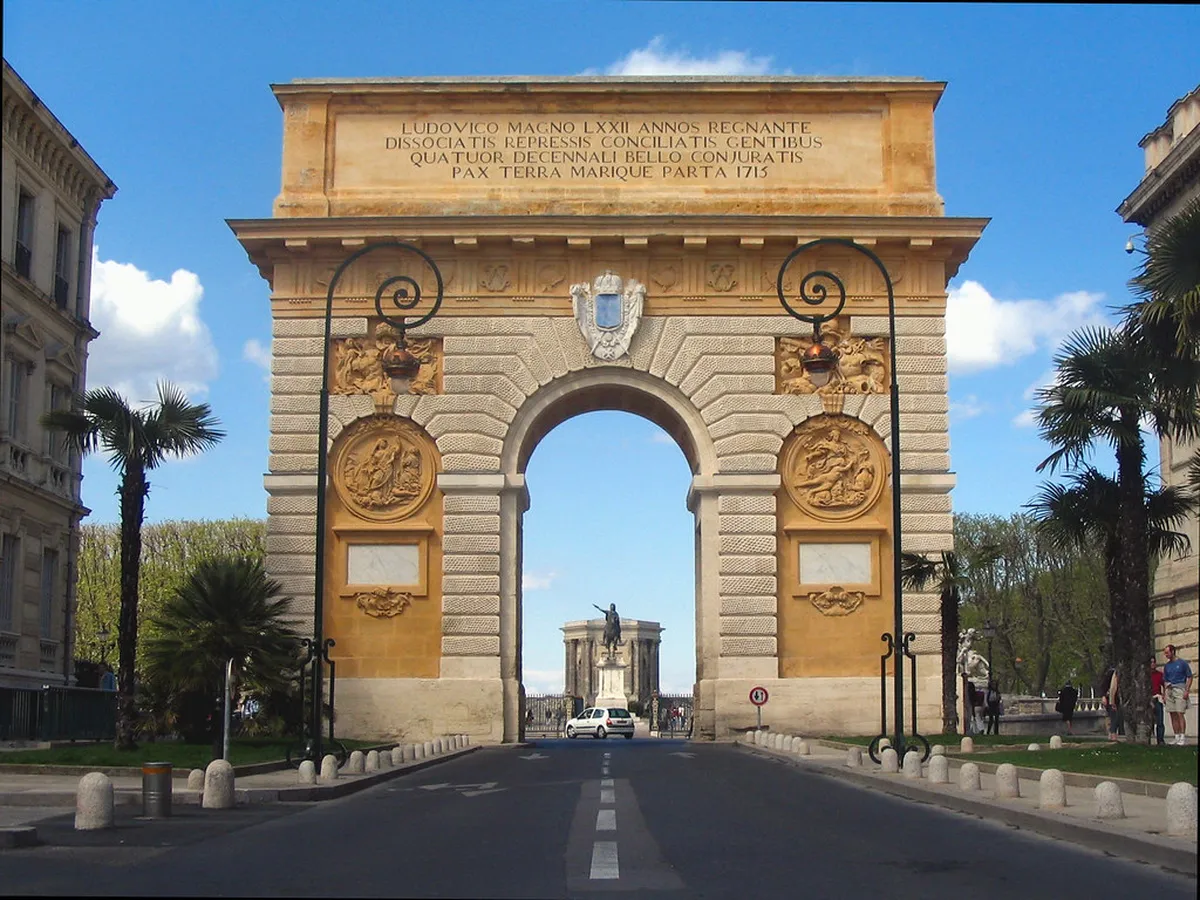
The Arc de Triomphe stands proudly in classic Roman style. It features a single archway. Corinthian columns adorn its facade. These details add to its majestic appearance.
Four ornate panels decorate the arch's exterior. They depict significant moments from Louis XIV's life. One panel shows the union of the two seas. This refers to the Canal du Midi's completion.
Another panel highlights the capture of Namur in 1692. These detailed carvings tell a powerful story. They serve as a lasting historical record. The arc showcases impressive architectural styles in Montpellier.
The structure primarily uses local stone. This material ensures its durability. Its robust construction has withstood centuries. This resilience makes it a true landmark. It stands firm against time.
The top section features a Latin inscription. It praises Louis XIV's accomplishments. This inscription further solidifies his legacy. It reminds visitors of his powerful reign.
A Symbol of Power and Legacy
Montpellier's Arc de Triomphe symbolizes royal authority. It connects directly to the Promenade du Peyrou. This promenade also honors King Louis XIV. It features an impressive equestrian statue of him.
The arc served as a grand processional entrance. Dignitaries and royalty passed beneath it. This tradition emphasized its importance. It was more than just a city gateway. It signified status.
It was part of a broader urban design. The design aimed to elevate Montpellier's status. The city became a jewel of the Languedoc region. This area held strategic importance for France. The planning was meticulous.
The monument's presence shaped the city's identity. It represents a period of French grandeur. Its legacy continues to resonate today. Visitors can still feel its historical weight. It inspires awe.
This architectural masterpiece connects past and present. It offers insights into 17th-century France. Its enduring presence enriches Montpellier. It is a powerful historical marker.
Visiting the Arc de Triomphe Montpellier in 2025
The Arc de Triomphe is easily accessible. It stands at the entrance to the Promenade du Peyrou. You can reach it by tram or on foot. Many historic Montpellier architecture tours include this site.
Accessing the top offers breathtaking city views. There is a small fee for entry. Guided tours are often available. Check local tourism office websites for current schedules and prices in 2025.
Consider visiting during daylight hours. The architectural details are clearest then. Sunset also offers beautiful photo opportunities. The golden light highlights its stone facade.
Nearby, you can explore the magnificent Aqueduct of Saint Clément. This Roman-inspired structure is impressive. The entire Promenade du Peyrou is worth exploring. It provides a peaceful escape from the bustling city.
Opening Hours: Typically 10 AM - 6 PM daily (seasonal variations). Cost: Approximately €3-€5 for access to the top. Always verify before your visit. Booking online may save time.
Frequently Asked Questions
When was the Arc de Triomphe in Montpellier built?
Construction on Montpellier's Arc de Triomphe began in 1691. It was completed and officially opened in 1693. King Louis XIV commissioned its building. This historical landmark is centuries old.
Who designed Montpellier's Arc de Triomphe?
François d'Orbay designed the Arc de Triomphe. He was a notable French architect. His work celebrated the king's power. It reflected popular architectural styles of the era.
What is the significance of the Arc de Triomphe Montpellier?
The arc celebrates the reign of King Louis XIV. It honors his military victories and grand achievements. It also serves as a majestic entrance. The Arc leads to the Promenade du Peyrou.
Can you go inside the Arc de Triomphe Montpellier?
Yes, visitors can access the top of the Arc de Triomphe. A spiral staircase leads to an observation deck. From there, you get panoramic city views. There is a small fee for this experience.
The Arc de Triomphe stands as a proud monument. Its rich history continues to captivate visitors. This landmark offers more than just beauty. It provides a window into Montpellier's past.
Discover its stories and grandeur for yourself. Plan your visit to this iconic structure. It is a must-see for anyone exploring famous Montpellier buildings. Experience its historical significance firsthand.
Key Takeaways
- Built in 1691-1693 by King Louis XIV.
- Designed by architect François d'Orbay.
- Symbolizes royal power and military victories.
- Offers panoramic views from its top.
- Located at the entrance to Promenade du Peyrou.